Top AI Skills Employers Are Hiring for Right Now

Top AI Skills Employers Are Hiring for Right Now
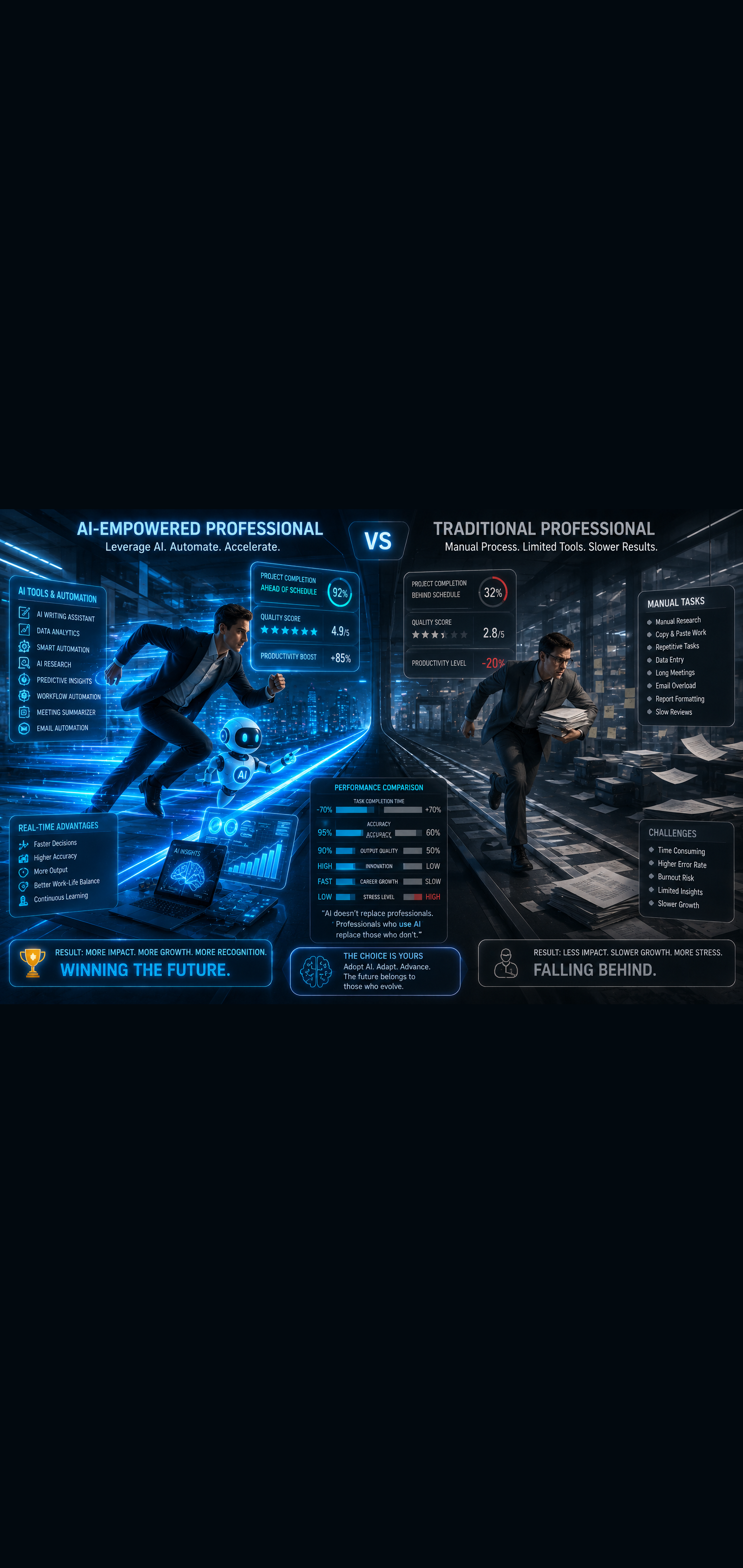
The job market has shifted faster than most people expected. Companies across every industry are not just looking for developers and data scientists anymore. They want professionals who understand AI, can work alongside it, and know how to make it deliver real business results. If you are wondering which AI skills employers are hiring for right now, this article breaks it all down with clarity.
Whether you are starting fresh, pivoting careers, or leveling up your current role, this guide gives you a clear roadmap.
Why AI Skills Are the Hottest Career Asset Right Now
Artificial intelligence is no longer a niche specialization. It is a core business function. From Fortune 500 companies to lean startups, organizations are rebuilding workflows around AI tools and capabilities. The demand for skilled professionals is outpacing supply by a wide margin.
According to multiple industry reports, AI-related job postings have increased dramatically year over year. Roles that require AI literacy now command significantly higher salaries than equivalent non-AI positions in the same field.
The good news? Many of these skills are learnable within months, not years.
1. Prompt Engineering: The Skill Everyone Underestimates
Prompt engineering is the art of communicating effectively with large language models like GPT-4, Claude, and Gemini to get precise, useful outputs. It sounds simple. In practice, it is a craft that takes real skill to master.
Employers are hiring prompt engineers, AI content strategists, and workflow automation specialists who know how to:
- Write structured, context-rich prompts
- Chain prompts for multi-step tasks
- Design AI workflows for marketing, customer support, and product development
- Evaluate and refine AI outputs for accuracy and tone
This is one of the most accessible AI skills for career changers. You do not need a computer science background. You need curiosity, critical thinking, and practice.
Platforms like Coursera, DeepLearning.AI, and even free YouTube channels offer strong foundational prompt engineering courses that employers recognize.
2. Machine Learning Fundamentals
Understanding how machine learning works, even at a conceptual level, has become a baseline expectation in many technical and semi-technical roles.
Employers are not necessarily looking for people who can build models from scratch. They want professionals who understand:
- Supervised vs. unsupervised learning
- How training data affects model performance
- Overfitting, underfitting, and model evaluation
- Basic use of Python libraries like scikit-learn and TensorFlow
If you are aiming for roles in data analytics, product management, or software development, adding machine learning literacy to your resume puts you ahead of the majority of applicants.
DeepLearning.AI's Machine Learning Specialization on Coursera (taught by Andrew Ng) remains one of the most respected entry points for this skill. It is practical, structured, and globally recognized.
3. Data Analysis and AI-Augmented Analytics
Data has always been valuable. What has changed is how fast AI can now process, interpret, and visualize it. Companies need professionals who can bridge the gap between raw data and strategic decisions using AI-powered tools.
Key skills in this category include:
- Proficiency in Python or R for data manipulation
- Experience with tools like Tableau, Power BI, or Google Looker
- Using AI features in Excel and Google Sheets for forecasting
- Understanding how to apply AI models to business datasets
The growing category of AI-augmented analytics is creating new roles like AI data analyst, business intelligence engineer, and decision intelligence specialist. These positions sit at the intersection of data skills and AI fluency, and they pay extremely well.
4. Natural Language Processing (NLP)
NLP is the branch of AI that deals with how machines understand and generate human language. It powers chatbots, sentiment analysis tools, translation software, and voice assistants.
Businesses are investing heavily in NLP for:
- Customer service automation
- Brand sentiment monitoring
- Document processing and summarization
- Legal and medical text analysis
If you have a background in linguistics, communications, or software development, NLP is a particularly strong specialization to pursue. Tools like Hugging Face's Transformers library have made NLP more accessible than ever, and the community is incredibly supportive for learners.
5. AI Tool Integration and Workflow Automation
This is one of the fastest-growing demand areas right now, and it does not require deep technical expertise. Companies need people who can take existing AI tools and weave them into real business workflows.
That means knowing how to use and connect platforms like:
- Zapier and Make for no-code automation
- ChatGPT API or Claude API for custom integrations
- Notion AI, HubSpot AI, and Salesforce Einstein for business operations
- n8n for more advanced workflow automation
If you can show an employer that you have automated a marketing pipeline, built an AI-assisted CRM workflow, or reduced a manual process from hours to minutes, you become immediately valuable. This skill is highly transferable across industries.
6. AI Ethics, Governance, and Responsible AI
This might surprise you, but it is a real and growing field. As companies deploy AI at scale, they face increasing scrutiny around bias, transparency, privacy, and regulatory compliance.
Roles like AI ethics officer, responsible AI lead, and AI policy consultant are emerging in both the private sector and government.
Employers in healthcare, finance, legal, and education sectors are particularly focused on hiring people who understand:
- Algorithmic bias and how to audit for it
- Data privacy laws like GDPR and emerging AI regulations
- Explainability in AI systems
- Frameworks for ethical AI deployment
This is an ideal path for professionals with backgrounds in law, policy, social sciences, or compliance who want to transition into the AI space without becoming engineers.
7. Generative AI for Creative and Business Applications
Generative AI has opened an entirely new category of professional skills. Businesses need people who can use tools like Midjourney, DALL-E, Runway, Sora, and AI writing platforms to produce content at scale without sacrificing quality.
In-demand applications include:
- AI-assisted content creation for blogs, ads, and social media
- AI video production and editing
- Product visualization and design prototyping
- Personalized marketing at scale using generative models
Marketing agencies, e-commerce brands, and media companies are actively hiring generative AI specialists. This is also one of the most accessible entry points for creatives, writers, designers, and marketers who want to future-proof their careers.
How to Build These AI Skills Efficiently
Knowing what to learn is only half the battle. Here is how to build these skills without wasting time or money.
Start with one focused path. Trying to learn everything at once leads to burnout. Pick the skill that aligns most with your current background and desired role.
Use structured learning platforms. Sites like Coursera, edX, Udemy, and LinkedIn Learning offer certificates that carry weight with recruiters. Many courses cost less than a single networking event and are available at your own pace.
Build a portfolio, not just a resume. Document projects, share what you are building, and demonstrate applied skills. A GitHub repo with a working AI integration or a case study showing a business problem you solved with AI is worth more than a list of course certificates.
Stay updated. AI moves fast. Subscribe to newsletters, follow practitioners on LinkedIn, and spend at least 30 minutes a week reading about what is changing in the field. Communities like Hugging Face, Towards Data Science, and AI Success Forum keep you connected to real developments.
Which AI Skills Should You Focus on First?
The right answer depends on where you are starting from. Here is a quick breakdown:
- No technical background? Start with prompt engineering and AI tool integration.
- Marketing or content background? Generative AI and AI-augmented analytics are natural fits.
- Data or analytics background? Move toward machine learning fundamentals and NLP.
- Legal, policy, or compliance background? AI ethics and governance is your lane.
- Software developer? Machine learning, NLP, and API integration will accelerate your value immediately.
Every path leads somewhere valuable if you commit to consistent learning and application.
The Bottom Line on AI Skills and Your Career
The professionals who will thrive in the next five years are not necessarily the smartest or the most experienced. They are the ones who adapt fastest, learn continuously, and apply AI tools with intention.
Top AI skills employers are hiring for are not locked behind expensive degrees or years of study. They are available to anyone willing to invest time, focus on practical application, and show up consistently.
The window to get ahead of the curve is still open. But it will not stay open indefinitely. Start building today.
Want more insights like this? Subscribe to the AI Success Forum newsletter.