Future-Proof Your Career: Skills That AI Cannot Easily Replace
Future-Proof Your Career: Skills That AI Cannot Easily Replace
AI is moving fast. Faster than most professionals expected even two years ago. Tools that once required teams of engineers are now accessible to anyone with a browser and a subscription. And with that speed comes a question that is impossible to ignore: what happens to my job?
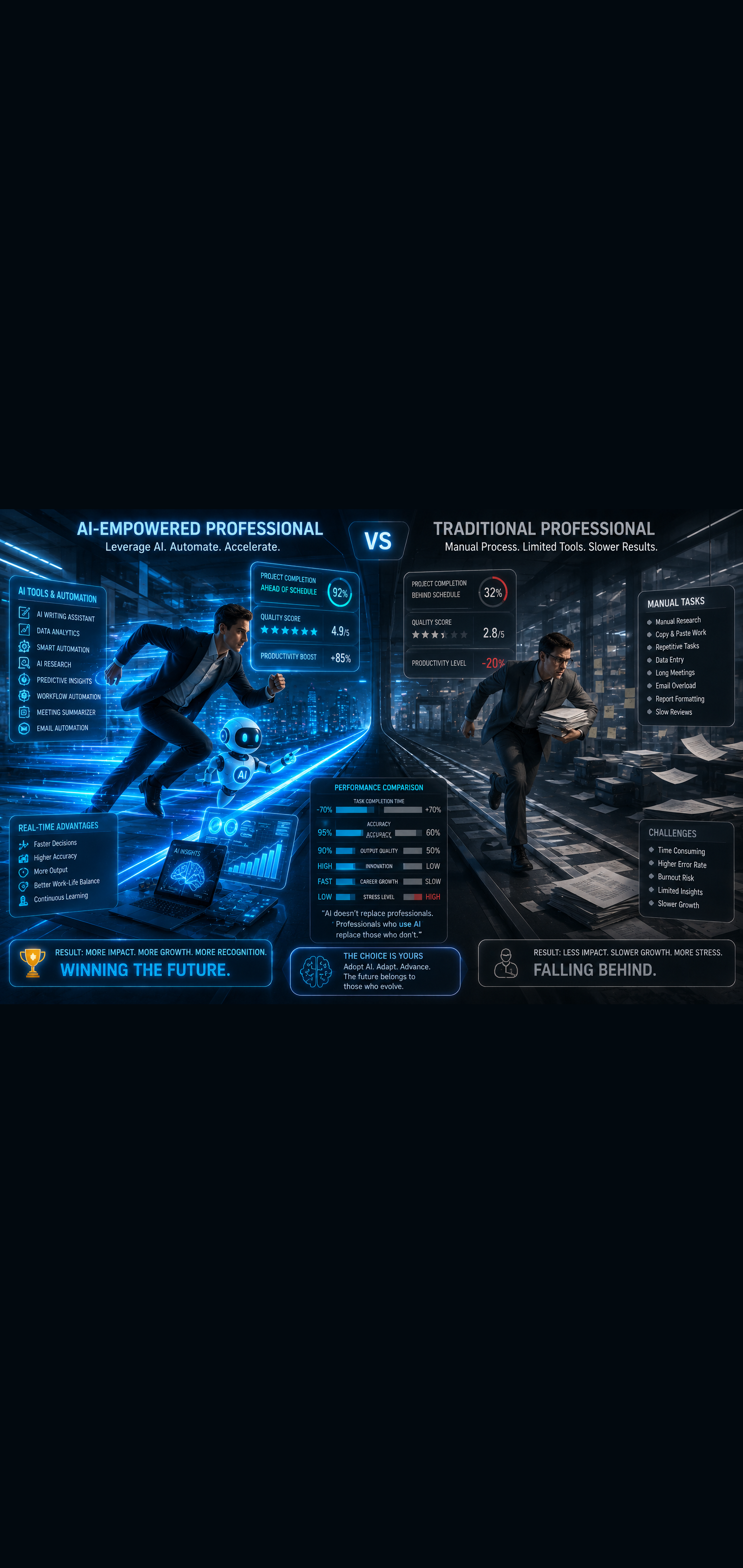
The honest answer is that AI will replace certain tasks, not certain people. The professionals who understand this distinction are already positioning themselves ahead of the curve. The ones who ignore it are the ones most at risk.
This guide identifies the human skills that remain genuinely valuable despite AI advancement, and shows you exactly how to develop them before the gap between you and your competition widens further.
Why Future-Proofing Your Career Starts With Understanding AI's Limits
AI is remarkably good at pattern recognition, data processing, content generation, and repetitive decision-making. It can analyze thousands of documents in seconds, generate code, write first drafts, and predict outcomes based on historical data.
What AI cannot do is navigate genuine ambiguity, build real human trust, exercise moral judgment under pressure, or understand the full context of a complex human situation.
These limitations are not bugs that future models will simply fix. They are structural. AI learns from data that humans create. It cannot originate new frameworks for thinking. It cannot feel accountability. It cannot read a room.
That is where your opportunity lives.
Critical Thinking and Complex Problem Solving
AI can surface options. It cannot reliably choose the right one in a high-stakes, context-dependent situation. That requires a human mind trained to evaluate trade-offs, challenge assumptions, and reason through uncertainty.
Critical thinking is the skill that separates professionals who use AI well from those who are replaced by it. When AI generates an answer, someone still needs to ask whether that answer is accurate, ethical, appropriate, and complete.
Organizations are already paying premium salaries for people who can do this well. Analysts, strategists, and advisors who bring structured thinking to messy problems are in higher demand than ever, precisely because AI makes the data abundant but judgment remains scarce.
How to build it:
- Practice structured decision-making frameworks like first-principles thinking and pre-mortem analysis
- Seek out roles and projects that require you to make recommendations, not just report findings
- Read widely outside your industry to train cross-domain pattern recognition
Emotional Intelligence and Human Connection
No AI can genuinely empathize. It can simulate empathy through language, but it cannot feel what a client feels when their business is failing, or understand the unspoken tension in a leadership team on the verge of collapse.
Emotional intelligence (EQ) covers self-awareness, empathy, relationship management, and social perception. These capabilities are deeply human and have become more valuable as AI handles more cognitive tasks.
Professionals with high EQ excel in roles involving negotiation, conflict resolution, team leadership, customer relationships, and coaching. These are areas where a single conversation can be worth more than any report an AI produces.
The World Economic Forum consistently ranks emotional intelligence among the top skills for future employment. That is not a coincidence.
How to build it:
- Actively seek feedback on how others experience your communication style
- Practice active listening in meetings, focusing fully on the speaker rather than formulating your response
- Invest in coaching, therapy, or leadership development programs that focus on self-awareness
Creative Thinking and Original Ideation
AI is generative but not truly creative. It recombines existing patterns in new ways. It cannot produce a genuinely original idea that has no precedent in its training data.
Human creativity, especially the kind that draws on lived experience, cultural context, and emotional depth, remains beyond what any current or near-future AI model can replicate with authenticity.
This applies to marketing strategy, product design, brand storytelling, artistic direction, and innovation leadership. The professionals who can generate ideas that surprise, challenge, and connect with real human audiences will always have a seat at the table.
Creativity also includes creative problem solving in business contexts. Finding unconventional approaches to operational challenges, reframing a failing product, or designing a new customer experience requires the kind of lateral thinking that AI consistently struggles with.
How to build it:
- Carve out unstructured thinking time in your weekly schedule, away from screens
- Practice creative constraints: try solving a problem with half the budget, half the time, or a completely different medium
- Study disciplines outside your own field to expose yourself to unfamiliar mental models
Leadership and Ethical Decision-Making
AI can recommend. It cannot lead. Leadership requires inspiring trust, managing uncertainty with confidence, and making calls that carry moral weight. These are not tasks you can automate.
As AI becomes embedded in business operations, someone needs to decide how it is used, what data it is trained on, who it affects, and where to draw the line. Ethical decision-making is now a core leadership competency, not a soft skill on the margins.
Companies are actively building roles around AI governance, responsible technology deployment, and human-AI collaboration strategy. These roles require people who understand both the technical landscape and the human consequences of technology decisions.
Leaders who can articulate a clear vision, build team cohesion, navigate organizational politics, and make principled calls under pressure are not threatened by AI. They are amplified by it.
How to build it:
- Take on leadership responsibilities in your current role, even informally
- Study ethics and philosophy alongside technical subjects
- Seek mentorship from leaders known for their judgment, not just their results
Communication and Persuasion
Writing a grammatically correct email is now trivially easy with AI. Crafting a message that moves a specific person to a specific action, in a specific context, with the right tone, timing, and emotional appeal? That is still a deeply human skill.
Persuasion requires understanding your audience at a level that goes beyond demographic data. It requires reading resistance, adjusting in real time, and building credibility over the course of a relationship. Public speaking, negotiation, pitching, and executive communication are skills that separate good professionals from exceptional ones.
AI tools can help you draft and refine content, but the strategic layer of communication, knowing what to say, when to say it, and how to say it for maximum impact, still belongs to the human professional.
How to build it:
- Join a public speaking group like Toastmasters or take a storytelling course
- Study negotiation frameworks like those from the Harvard Negotiation Project
- Write regularly, whether in a newsletter, blog, or internal thought leadership format
Adaptability and Continuous Learning
Perhaps the most future-proof skill of all is the ability to keep learning and changing as the landscape shifts beneath you.
AI tools evolve quickly. The tools that matter most today may be replaced by something entirely different in 18 months. The professionals who thrive are not necessarily the ones who master any single tool. They are the ones who can assess new technologies quickly, integrate them into their workflow, and continuously upgrade their value to employers and clients.
Adaptability is partly mindset and partly habit. It means staying curious, tolerating ambiguity, embracing discomfort as a signal of growth, and building learning into your weekly routine rather than treating it as an occasional event.
How to build it:
- Dedicate at least three to five hours per week to deliberate skill development
- Experiment with new AI tools regularly so you stay ahead of adoption curves
- Build a personal learning system: curate sources, take notes, apply what you learn immediately
Collaboration and Cross-Functional Teamwork
The most valuable work happening in organizations today sits at the intersection of disciplines. AI strategy requires people who understand both technology and business. Product development needs engineers who can collaborate with designers and marketers. Organizational transformation requires change managers who can bridge technical and human dimensions.
Deep collaboration across functions is something AI cannot facilitate on its own. It requires trust, communication, and the ability to translate ideas across professional languages. Professionals who are known for their ability to bring diverse teams together are consistently promoted and retained, regardless of what AI does to the broader market.
How to build it:
- Volunteer for cross-functional projects outside your core department
- Develop T-shaped expertise: go deep in one area while building broad exposure across several others
- Learn to speak the language of adjacent functions, whether that is finance, design, or engineering
Final Thoughts
AI is not your enemy. It is a tool, and like every powerful tool, it rewards the people who know how to use it strategically while contributing something the tool itself cannot replicate.
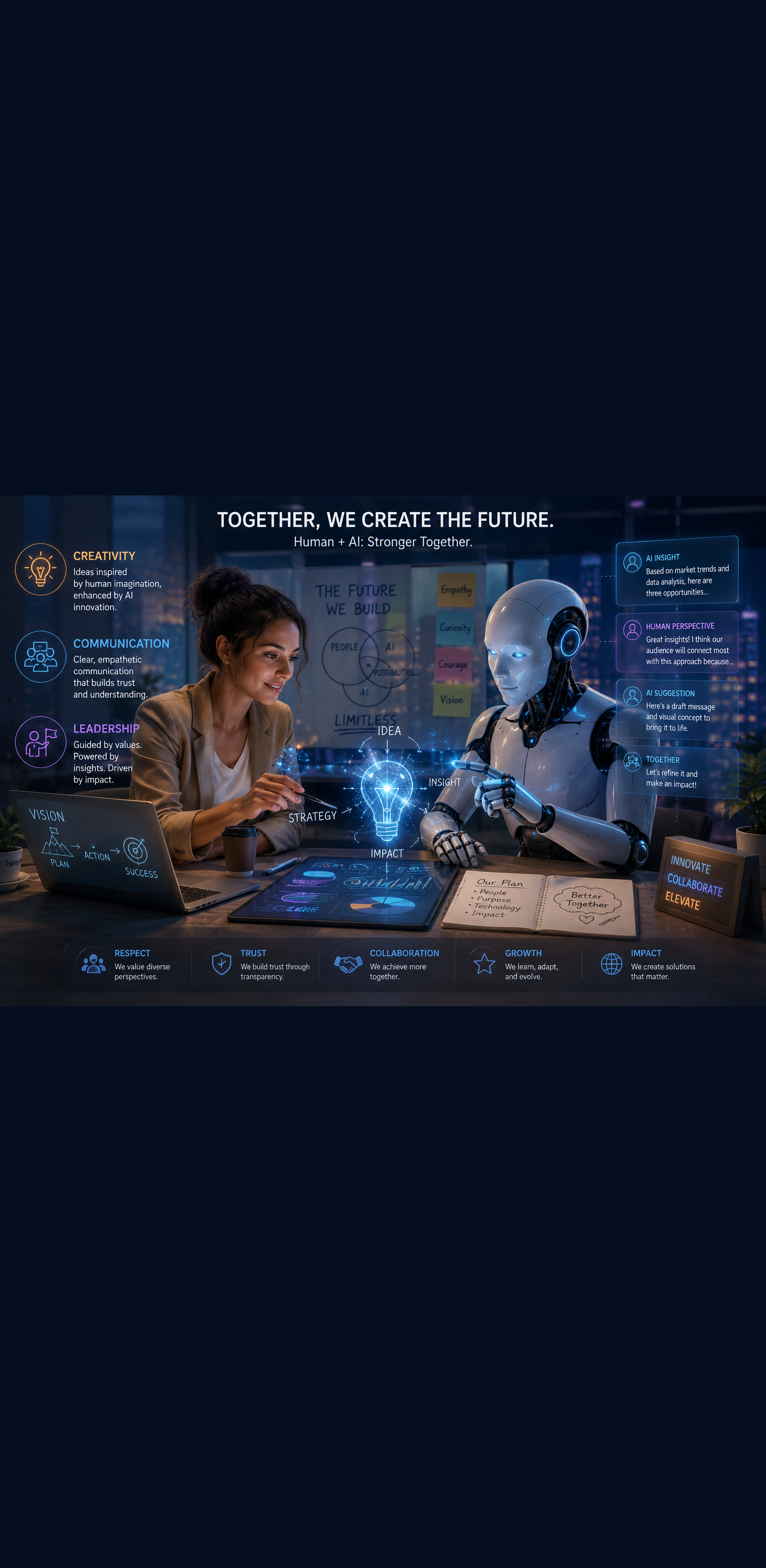
The professionals who will thrive over the next decade are not the ones who resist AI or fear it. They are the ones who pair genuine human capabilities with smart AI adoption. Critical thinkers who use AI to accelerate their research. Creative leaders who use AI to execute faster while they focus on vision. Communicators who use AI to draft while they focus on strategy.
Start by identifying which of these skills you want to develop first. Then build a plan and act on it this week.
Your career is worth the investment.
Want more insights like this? Subscribe to the AI Success Forum newsletter.