How to Learn New Skills 10x Faster Using AI

How to Learn New Skills 10x Faster Using AI
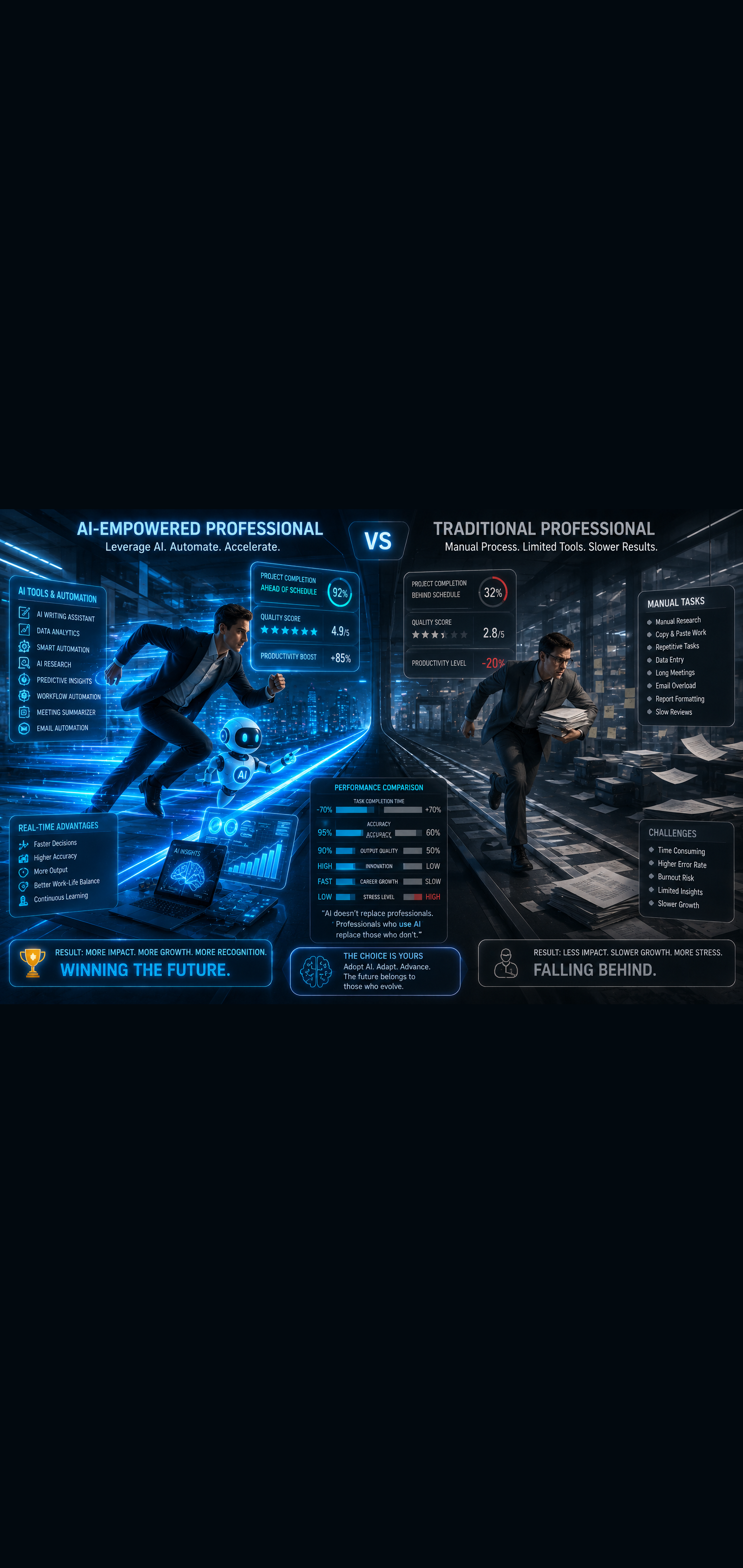
The half-life of professional skills is shrinking. What made you valuable five years ago may already be outdated, and the skills in demand today will evolve again before you know it. The professionals winning in this environment are not necessarily the smartest people in the room. They are the fastest learners.
Learning new skills 10x faster using AI is no longer a productivity hack reserved for tech insiders. It is a practical, accessible strategy available to anyone willing to change how they approach learning. This guide gives you a complete system for using AI tools to absorb knowledge faster, retain it longer, and apply it to real career growth.
Why Traditional Learning Methods Are Too Slow
Most people learn new skills the same way they did in school. They buy a course, watch videos at 1.5x speed, take some notes, and hope it sticks. The results are predictable — a lot of time invested, not much retained, and even less applied.
The problem is not effort. It is method.
Traditional learning is passive, one-size-fits-all, and completely disconnected from how your brain actually builds long-term knowledge. AI-assisted learning fixes all three of those problems simultaneously.
How AI Changes the Learning Equation
AI tools like ChatGPT act as a personal tutor, study partner, and practice coach available any time you need them. Unlike a course or a textbook, AI can:
- Explain concepts at exactly the level you need, not too basic and not over your head
- Answer follow-up questions instantly without judgment
- Adapt to your specific goals, background, and learning pace
- Generate practice problems, scenarios, and real-world applications on demand
- Quiz you on material to reinforce retention through active recall
That combination is what accelerates learning dramatically. Let's break down how to apply it.
Step 1: Define What You Actually Need to Learn
The biggest time waster in skill development is learning the wrong things. Most people start too broad, try to learn everything, and end up mastering nothing.
Use AI to Build a Targeted Learning Map
Before you consume a single piece of content, ask ChatGPT:
"I want to learn [skill] so I can [specific goal, e.g., get promoted, freelance, build a product]. What are the 20% of concepts I need to master that will give me 80% of the results? Give me a prioritized learning path."
This Pareto-focused approach immediately narrows your focus to what matters most. You stop wasting time on theory that will never apply to your situation.
Get a Skill Gap Analysis
If you are building on existing knowledge, ask AI to identify your specific gaps:
"I already know [what you know] about [topic]. I want to reach [target skill level]. What specific gaps do I need to fill and in what order?"
A personalized gap analysis is something most courses and books cannot give you. AI delivers it in seconds.
Step 2: Learn New Skills 10x Faster Using AI as Your Personal Tutor
Once you know what to learn, AI becomes your on-demand instructor. This is where the speed advantage becomes very real.
Learn by Asking, Not by Watching
Instead of watching a 4-hour course introduction before getting to anything useful, start with a direct question:
"Explain [concept] to me like I have basic knowledge of [related field]. Use a practical example I can relate to."
Get the concept, ask follow-up questions, push deeper into the parts that matter to you, and move on. This active, dialogue-based learning is significantly more effective than passive video consumption.
Use the Feynman Technique with AI
The Feynman Technique is one of the most proven learning methods in existence. It works by forcing you to explain a concept in simple terms, which instantly reveals the gaps in your understanding.
Here is how to apply it with AI:
- Learn a concept from any source
- Explain it back to ChatGPT in your own words, as simply as possible
- Ask: "What did I get wrong, oversimplify, or leave out?"
- Fill the gaps and repeat
This loop turns passive reading into active mastery. It is uncomfortable at first, which is exactly why it works.
Request Analogies and Mental Models
Abstract concepts click faster when connected to something you already understand. Ask AI:
"Explain [complex concept] using an analogy from [a field I already know well, e.g., sports, cooking, business]."
Strong mental models compress learning time dramatically because your brain files new information next to existing knowledge instead of starting from scratch.
Step 3: Accelerate Retention with AI-Powered Practice
Understanding something once is not the same as knowing it. Retention requires repetition, application, and recall. AI makes all three faster and more targeted.
Generate Custom Practice Problems
For technical skills, ask AI to create practice exercises tailored to your level and goals:
"Give me 10 progressively harder practice problems for [skill]. Start at beginner level and build to intermediate. After each one I answer, give me feedback on what I got right and where I went wrong."
This beats generic textbook exercises because every problem is calibrated to where you actually are.
Use Active Recall Quizzing
One of the most research-backed learning strategies is active recall — testing yourself on material rather than re-reading it. AI makes this effortless:
"Quiz me on [topic]. Ask me one question at a time. After each answer, tell me if I am correct, what I missed, and give me a brief explanation before moving to the next question."
Run a 15-minute quiz session after every learning block and your retention will improve dramatically compared to passive review.
Apply Learning to Real Scenarios
Knowledge that cannot be applied fades quickly. After learning a concept, ask AI to create realistic scenarios where you practice using it:
"Give me a real-world scenario where I would need to use [skill or concept] in a [your industry] context. Walk me through the situation and let me work through the solution."
Simulated application bridges the gap between knowing something and being able to use it under pressure.
Step 4: Use AI to Learn from the Best Sources Faster
Not all learning happens through AI conversations. The best learners combine AI-assisted study with high-quality books, courses, and mentors. AI helps you extract value from those sources faster.
Extract Key Insights from Books and Articles
Paste a chapter, article, or transcript into ChatGPT and ask:
- "What are the 5 most important ideas in this text?"
- "What is the core argument and what evidence supports it?"
- "What are the practical takeaways I can apply immediately?"
This is not a replacement for deep reading. It is a triage tool that helps you decide where to slow down and go deep versus where to move quickly.
Build a Second Brain with AI Assistance
As you learn, use AI to help you organize and connect your knowledge. After a study session, ask:
"Here are my notes from today: [paste notes]. Help me summarize the key insights, identify any gaps, and suggest what I should study next to reinforce this knowledge."
This reflection habit converts scattered notes into a structured knowledge base that compounds over time.
Find the Best Learning Resources Fast
Instead of spending hours researching where to learn something, ask AI directly:
"I want to learn [skill] to a professional level. What are the best books, courses, communities, and practitioners to follow? Organize by format and level."
Combine this with your own research and you shortcut the resource discovery phase entirely.
Step 5: Build Skills That Stick Through Consistent Practice
Speed of learning means nothing if the knowledge evaporates in two weeks. The final layer of AI-assisted learning is building systems that keep skills sharp over time.
Create a Spaced Repetition Schedule
Spaced repetition is the science of reviewing material at increasing intervals to move it into long-term memory. Ask AI to help you build a simple schedule:
"I learned [topic] today. Build me a 30-day spaced repetition review schedule with what to review and when, using progressively longer intervals."
Even 10 minutes of review on the right days makes a dramatic difference in long-term retention.
Set Weekly Learning Goals with AI Accountability
Treat AI like a learning coach. At the start of each week, share your learning goal and ask for a structured plan. At the end of the week, report back on your progress and ask for an honest assessment and adjusted plan for next week.
This structured accountability loop keeps learning from slipping off your priority list when work gets busy.
Learn in Public to Reinforce Knowledge
Teaching what you learn is one of the most powerful ways to deepen it. Use AI to help you turn your learning into LinkedIn posts, short articles, or team presentations. Explaining something to others forces you to truly understand it.
This approach doubles as personal brand building, which creates a compounding career benefit alongside the skill development itself.
The Best AI Tools for Accelerated Learning
Several tools work particularly well for AI-assisted skill development:
- ChatGPT: Best all-around tutor, practice partner, and concept explainer
- Claude: Excellent for nuanced analysis, long-form reading assistance, and structured learning plans
- Perplexity AI: Great for research with cited sources when you need verified information
- Notion AI: Useful for organizing notes, summarizing content, and building your knowledge base
- Anki with AI-generated flashcards: Combine AI-created quiz questions with spaced repetition software for technical subjects
You do not need all of them. Pick one or two and use them consistently rather than tool-hopping.
What AI Cannot Do for You
A clear-eyed perspective matters here. AI accelerates learning, but it does not replace the fundamentals:
- Deliberate practice still requires effort. AI can guide your practice, but you still have to do the reps.
- Real-world application cannot be fully simulated. Use AI to prepare, then go apply your skills in actual situations as quickly as possible.
- Critical thinking is your responsibility. AI can be wrong. Always verify important information and develop your own judgment alongside your AI-assisted learning.
The professionals who learn fastest with AI are those who use it as a force multiplier for their own effort, not a substitute for it.
Conclusion: The Fastest Learners Will Win
The career advantages of learning quickly are enormous. Every new skill you build opens new opportunities, increases your value, and expands what is possible for you professionally and financially.
Learning new skills 10x faster using AI is not about cutting corners. It is about cutting waste — removing the inefficiency from traditional learning so your effort actually converts into capability.
Start today. Pick one skill you have been putting off. Spend 30 minutes with ChatGPT building a targeted learning plan. Run your first active recall session. Apply what you learn as fast as possible.
The gap between where you are and where you want to be is smaller than you think when you are learning at this speed.
Want more insights like this? Subscribe to the AI Success Forum newsletter.