How to Build a High-Income Skill Stack with AI

How to Build a High-Income Skill Stack with AI
The professionals earning the most in today's market are not necessarily the most experienced or the most credentialed. They are the ones who have built a skill stack that is difficult to replicate and directly tied to outcomes that organizations are willing to pay premium rates to achieve.
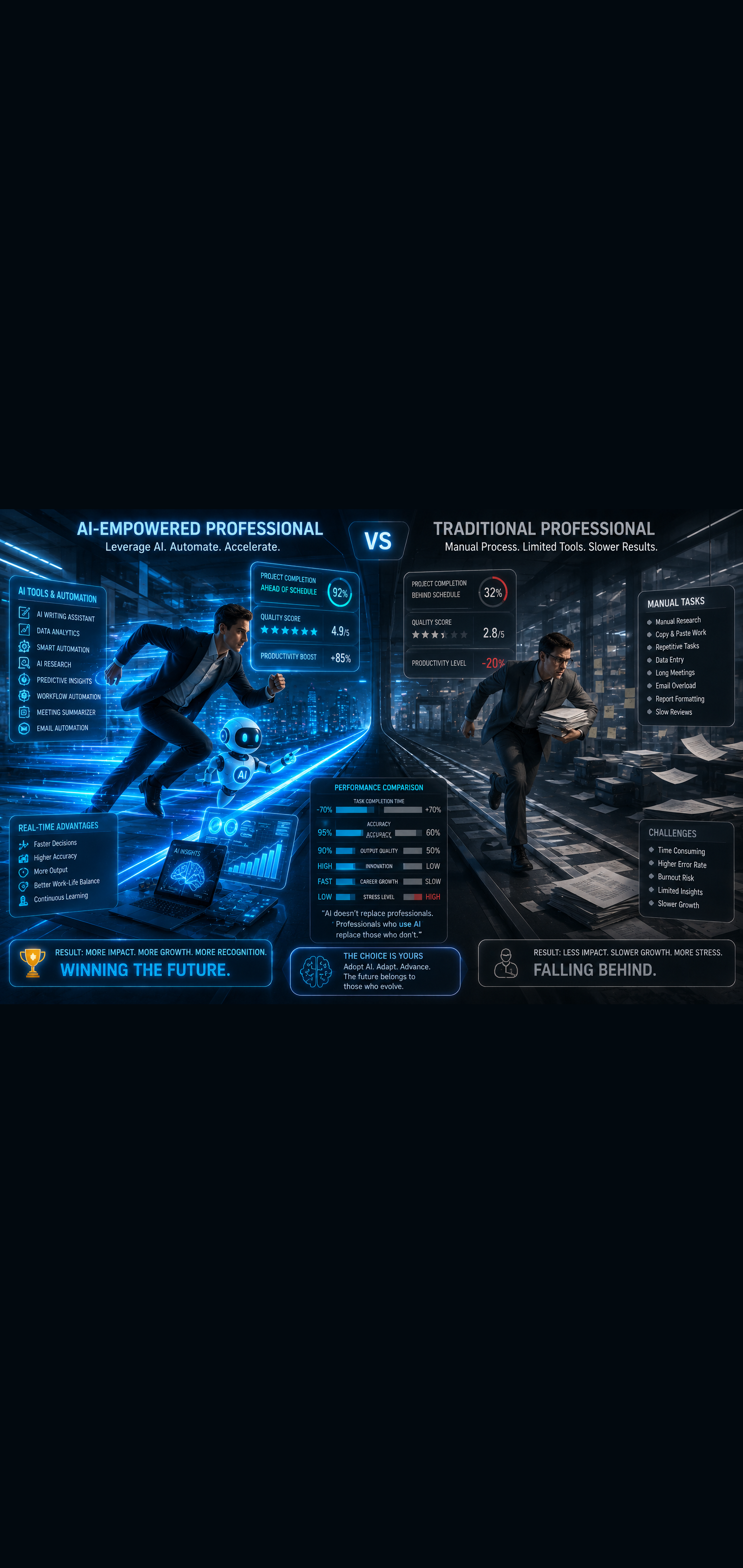
AI has fundamentally changed what that skill stack looks like and how fast you can build it. The combination of a sharp human skill set and strategic AI fluency is creating a new tier of high-income professionals across every industry. Writers who understand automation. Marketers who can build AI-driven systems. Consultants who deliver in days what used to take weeks.
This guide shows you exactly how to build a high-income skill stack with AI, regardless of your current background or starting point.
What Is a Skill Stack and Why It Matters More Than Ever
A skill stack is not just a list of things you know how to do. It is the specific combination of skills that makes you uniquely valuable in a defined context.
The concept, popularized by Scott Adams, is based on a simple insight: being in the top one percent of any single skill is extremely difficult. But combining two or three skills where you are in the top 20 to 25 percent creates a profile that very few people share, and the market rewards scarcity.
In the AI economy, the skill stack model has become even more powerful. AI tools are dramatically lowering the barrier to reaching competence in many technical and creative areas. This means that a professional with strong foundational skills can now add AI-augmented capabilities to their stack far faster than would have been possible three years ago.
The result is a new class of professionals who are not just specialists or generalists. They are integrated operators who combine human judgment with AI leverage, and they are commanding income levels that reflect it.
The Three Layers of a High-Income AI Skill Stack
Building a high-income skill stack with AI requires thinking in three distinct layers. Each one adds value. Together, they create something the market will consistently pay for.
Layer One: Your Core Human Skill
This is the foundation of everything. Your core skill is the area where you bring genuine expertise, judgment, and experience that AI cannot replicate on its own. It is your primary value driver and the lens through which you apply everything else.
Core skills that anchor high-income stacks include:
- Strategic thinking and business analysis
- Creative direction and brand storytelling
- Technical problem solving and systems design
- Relationship building and sales
- Domain expertise in law, medicine, finance, or engineering
- Instructional design and training development
If you do not already have a clear core skill, this is where you start. Identify the area where you have the most genuine depth and where the market already values your contribution. That is your anchor.
Layer Two: AI Tool Fluency
This is the layer that multiplies your core skill. AI tool fluency means knowing which tools to use, how to use them effectively, and critically, where they fall short and require human judgment to correct.
This is not about learning every AI tool on the market. It is about developing real working proficiency with the tools most relevant to your domain and your target market.
For a writer, this might mean mastering Claude or ChatGPT for drafting and editing, Perplexity for research, and Grammarly or Hemingway for refinement. For a marketer, it could be Jasper for content, Midjourney for creative assets, and an AI-native analytics platform for performance insight. For a consultant, it might be AI-powered research tools, presentation builders, and workflow automation platforms like Zapier or Make.
The key is depth over breadth. Knowing ten tools superficially is far less valuable than knowing three tools at a level where you consistently produce better outputs than someone using the same tools without your expertise.
Layer Three: A Business or Delivery Skill
The third layer is what converts your expertise and AI capability into income. This is the layer most people skip, and it is exactly why many skilled professionals are still underearning.
Business and delivery skills include:
- Copywriting and persuasion
- Project and client management
- Sales and negotiation
- Content distribution and audience building
- Systems design and process documentation
- Teaching and curriculum development
These skills determine how effectively you can package, communicate, and deliver the value you create. A brilliant AI-augmented analyst who cannot communicate findings persuasively will always earn less than a slightly less technical analyst who presents with clarity and conviction.
Build all three layers and you have a skill stack that is genuinely difficult to compete with.
High-Income Skill Stack Examples That Are Working in 2026
Abstract frameworks are useful. Concrete examples are more useful. Here are five skill stack combinations that are generating strong income in the current market.
The AI Content Strategist
Core skill: Content marketing and editorial judgment AI layer: Claude or ChatGPT for drafting, Surfer SEO for optimization, Midjourney for visuals Business layer: SEO strategy, client communication, content systems design
This profile commands $80,000 to $130,000 annually in-house, or $75 to $150 per hour as a consultant. The ability to build and manage an AI-powered content operation that consistently produces high-ranking, high-converting content is a genuine competitive advantage.
The Automation Consultant
Core skill: Business process analysis and operations management AI layer: Zapier, Make, and GPT-powered workflow automation Business layer: Consulting, client discovery, solution scoping and delivery
Automation consultants who can identify manual processes and build AI-powered systems to replace them are in significant demand across small and mid-sized businesses. Freelance rates range from $100 to $250 per hour, with retainer arrangements common for ongoing optimization work.
The AI-Augmented Financial Analyst
Core skill: Financial modeling and investment analysis AI layer: AI-native research tools, data analysis with Python and GPT-powered interpretation, automated reporting Business layer: Stakeholder communication, narrative presentation of data, client relationship management
Financial professionals who integrate AI into their workflow are producing analysis faster and at higher volume than traditionally trained peers. Senior roles in this profile regularly exceed $140,000 in total compensation.
The Product-Led Educator
Core skill: Teaching, curriculum design, or domain expertise in a high-demand field AI layer: AI course creation tools, video scripting with LLMs, personalized learning system design Business layer: Audience building, digital product sales, community management
Online educators who combine genuine expertise with AI-assisted content production and distribution are building six-figure course businesses with dramatically lower production overhead than was required three years ago. Platforms like Teachable, Maven, and Kajabi support this model directly.
The Technical Recruiter Turned AI Talent Strategist
Core skill: Recruiting, talent assessment, and workforce planning AI layer: AI sourcing tools, resume screening systems, market intelligence platforms Business layer: Executive advising, talent consulting, employer brand development
Recruiters who evolve into AI talent strategists are moving from transactional fee-based work into retained advisory arrangements. Senior talent consultants in this profile are billing $150,000 to $250,000 annually in retained and project-based engagements.
How to Build Your AI Skill Stack Step by Step
Knowing what a skill stack looks like and building one are different challenges. Here is a practical process that works.
Step One: Audit What You Already Have
Start with an honest inventory. List every skill you have used professionally in the last three years. Include technical skills, soft skills, domain knowledge, and tools. Then identify which of these have the clearest market demand and the strongest alignment with your interests.
Your core skill is usually already visible in this list. It is the thing you do better than most people around you and that others come to you for. If it is not obvious, look at where you have produced the most measurable results in your career.
Step Two: Identify the AI Tools That Multiply Your Core Skill
Research which AI tools are being adopted by high performers in your target role or industry. Follow practitioners on LinkedIn and X, read newsletters in your field, and pay attention to which tools keep appearing in job descriptions and case studies.
Then pick two or three and invest real time in learning them deeply. Most professionals significantly underestimate what these tools can do because they use them at a surface level. Spend 30 to 60 days going deep on a single tool before adding the next one.
Step Three: Close the Business Layer Gap
Assess which business or delivery skill is the weakest link in your stack right now. For most people, it is either communication and persuasion, or the ability to attract and convert clients or opportunities.
Invest targeted time here. A copywriting course, a negotiation workshop, a public speaking program, or a content distribution strategy can meaningfully shift your earning potential within six months when combined with a strong core skill and AI fluency.
Step Four: Package and Position Your Stack
Your skill stack only generates income if the right people know about it. This means building a clear professional narrative that communicates what you do, who you do it for, and what outcomes you produce.
Update your LinkedIn profile, resume, and any portfolio to reflect your current stack. Write about your work publicly, whether through LinkedIn posts, a newsletter, or a personal blog. Visibility compounds over time and creates inbound opportunities that cold outreach never matches.
How AI Accelerates Skill Stack Development
One of the most underappreciated benefits of AI tools is how dramatically they accelerate learning and skill development itself.
Professionals using AI tools to study new subjects are compressing what used to take months into weeks. You can use Claude or ChatGPT to explain complex concepts in plain language, generate practice problems, review your work, simulate client conversations, and build project examples faster than any traditional learning method allows.
This means the time between deciding to build a new skill and reaching practical competence has shortened significantly. A professional who commits to deliberate, AI-assisted learning for three to four hours per week can build meaningful new capabilities within a quarter.
The compounding effect over 12 to 24 months is significant. Professionals who start building their AI skill stack now will be two to three years ahead of those who wait until the shift becomes impossible to ignore.
Common Mistakes That Slow Skill Stack Growth
Even with the right strategy, these patterns will limit your progress:
Collecting tools instead of mastering them. Subscribing to ten AI platforms and using each one occasionally does not build a skill stack. It builds a monthly subscription bill. Depth beats breadth every time.
Skipping the business layer. Technical and creative skills without a delivery mechanism stay hobbies. Build the skills that convert your value into income.
Staying invisible. The market cannot pay you for a skill stack it does not know you have. Consistent public output, whether writing, speaking, or building, is not optional for professionals who want inbound opportunities.
Waiting for the perfect moment. The best time to start building was a year ago. The second-best time is now. Every week of delay is a week of compounding you do not get back.
Final Thoughts
Building a high-income skill stack with AI is not about becoming a different person or reinventing your career from scratch. It is about taking what you already do well, adding AI leverage on top of it, and developing the business skills to convert that combination into consistent, growing income.
The professionals who are earning the most in the AI economy right now are not the ones who know the most. They are the ones who have built the most integrated and market-relevant combination of human and AI capabilities, and who have positioned themselves clearly in front of the right audience.
Start with your core skill. Add one AI tool. Close one business layer gap. Build in public.
That is the stack. Start building it today.
Want more insights like this? Subscribe to the AI Success Forum newsletter.