AI Career Roadmap: From Beginner to High-Income Professional

Most people know AI is changing the job market. Far fewer know exactly what to do about it.
If you have been searching for a clear, no-fluff path from where you are now to a high-income AI career, you are in the right place. This AI career roadmap breaks the journey into stages anyone can follow, whether you have a technical background or not.
The AI economy is not waiting for you to feel ready. Let this be the guide that gets you moving.
What Does an AI Career Actually Look Like in 2026?
Before you map out a destination, you need to know what you are heading toward. AI careers in 2026 are not limited to software engineers and research scientists. The field has expanded dramatically, and high-income opportunities now exist across every major industry.
Some of the fastest-growing AI roles today include:
- AI Prompt Engineer: Designing and optimizing prompts for business use cases
- AI Product Manager: Leading AI-powered product development and strategy
- Machine Learning Engineer: Building and deploying predictive models
- AI Data Analyst: Interpreting AI-generated insights for business decisions
- AI Content Strategist: Using AI tools to scale content operations
- Automation Consultant: Helping businesses streamline workflows with AI tools
Salaries across these roles range from $70,000 for entry-level positions to well above $200,000 for senior technical and strategic roles. The key is knowing which path fits your background and goals, then building toward it with intention.
Stage 1: Build Your Foundation (Months 1 to 3)
Understand How AI Actually Works
You do not need to write code to understand AI. But you do need a working knowledge of the core concepts if you want to operate at a professional level.
Start with the basics:
- What is machine learning and how does it differ from traditional programming
- How large language models (LLMs) like GPT and Claude generate responses
- The difference between narrow AI, generative AI, and general AI
- How AI tools are being applied across industries right now
Free resources like Google's "AI Essentials" course, IBM's AI Fundamentals on Coursera, and Andrew Ng's "AI for Everyone" on Coursera are excellent starting points. These require no coding knowledge and can be completed in a few weeks.
Pick Your AI Career Track Early
Trying to learn everything at once is one of the biggest mistakes beginners make. The fastest path to income is choosing a lane and going deep.
Ask yourself three questions:
- What industry or domain do I already have experience in?
- Do I prefer working with data, people, content, or systems?
- Am I comfortable learning technical skills, or do I want to focus on strategy and application?
Your answers will point you toward the right track. A former teacher might thrive as an AI curriculum designer. A marketer might move into AI content strategy. A business analyst might pivot into AI data roles.
Stage 2: Develop Job-Ready AI Skills (Months 3 to 6)
Master the Tools That Employers Are Using Right Now
Reading about AI is not enough. You need hands-on experience with the actual tools being used inside companies today.
Depending on your chosen track, prioritize learning:
- ChatGPT and Claude: For content, communication, research, and productivity workflows
- Midjourney or DALL-E: For visual content and creative roles
- Python basics: For data analysis, automation, and technical AI roles
- LangChain or AutoGPT: For building AI-powered workflows and agents
- Zapier or Make: For no-code automation across business tools
- Power BI or Tableau with AI integrations: For data and analytics roles
You do not need to master all of these. Pick the tools most relevant to your track and build real projects with them. Employers care far more about what you can do than what courses you have completed.
Get Certified in High-Value AI Skills
Certifications are not magic tickets to employment, but they do two important things. They signal credibility to employers, and they force you to learn with structure and accountability.
High-value certifications worth pursuing in 2026 include:
- Google Professional Machine Learning Engineer
- Microsoft Azure AI Engineer Associate
- AWS Certified Machine Learning Specialty
- DeepLearning.AI specializations (available on Coursera)
- HubSpot AI Marketing Certification (for marketing-focused tracks)
Platforms like Coursera, Udemy, and LinkedIn Learning offer most of these at an accessible price point. Some employers even cover certification costs as part of professional development budgets, so it is worth asking.
Stage 3: Build a Portfolio That Gets You Hired (Months 6 to 9)
Projects Speak Louder Than Resumes
In the AI field, a strong portfolio carries more weight than a degree or a list of certificates. Hiring managers want to see that you can solve real problems, not just describe theoretical ones.
Start building projects that demonstrate your chosen skills:
- Build an AI-powered chatbot for a fictional or real small business
- Create an automated content pipeline using AI writing tools and scheduling platforms
- Analyze a public dataset and use AI to surface actionable insights
- Document a workflow automation project from problem to solution
Every project you build becomes a story you can tell in an interview. "I built X, it solved Y, and it produced Z result" is the kind of answer that lands offers.
Document Everything on LinkedIn and GitHub
Your portfolio needs to be visible to matter. LinkedIn and GitHub are the two platforms where AI professionals get discovered, recruited, and hired.
On LinkedIn:
- Post about what you are learning and building every week
- Share project results with screenshots, metrics, or before-and-after comparisons
- Write short articles about AI topics related to your track
On GitHub (for technical tracks):
- Push all your project code with clear README documentation
- Comment your code so others can follow your logic
- Star and contribute to popular AI repositories to build visibility
Consistency here builds a professional reputation faster than almost anything else. You are not just learning. You are broadcasting your growth in real time.
Stage 4: Land Your First High-Value AI Role or Client (Months 9 to 12)
Target the Right Opportunities
By this stage, you have foundational knowledge, relevant skills, certifications, and a growing portfolio. Now it is time to get strategic about where you apply.
For job seekers, focus on:
- Companies that have publicly announced AI integration initiatives
- Startups in the AI space that are scaling quickly and need versatile contributors
- Large enterprises building internal AI teams across departments
- Consulting firms that are hiring AI specialists to serve enterprise clients
Job boards like LinkedIn Jobs, Wellfound (for startups), and Otta surface many of these opportunities. Set up alerts using keywords tied to your track so you never miss a relevant posting.
Consider Freelancing as Your Fast Track to Income
Freelancing in AI is one of the highest-leverage career moves available right now. Companies of all sizes need AI help but cannot always justify a full-time hire. That gap is your opportunity.
Platforms like Toptal, Contra, and Upwork have seen a major surge in demand for AI freelancers. Services that clients are actively paying for include:
- AI workflow setup and automation consulting
- Prompt engineering and AI tool training for teams
- AI-assisted content creation and strategy
- Custom GPT or chatbot development for business use
Even charging $75 to $150 per hour for a few projects a month creates meaningful income while you build toward your full-time goal.
Stage 5: Scale Into a High-Income AI Professional (Year 2 and Beyond)
Specialize to Command Premium Rates
Generalists get hired. Specialists get paid more. Once you have your footing in the AI field, the next move is to go deeper in one high-value niche.
The highest-earning AI professionals in 2026 tend to specialize in areas like:
- AI in healthcare: Helping medical organizations implement diagnostic and operational AI tools
- AI in finance: Building risk models, fraud detection systems, and trading algorithms
- Enterprise AI strategy: Advising C-suite leaders on AI adoption and change management
- AI safety and ethics: Ensuring AI systems are compliant, fair, and responsibly deployed
Specialization allows you to charge premium rates, attract better clients or employers, and build a reputation that generates inbound opportunities.
Keep Learning or Keep Falling Behind
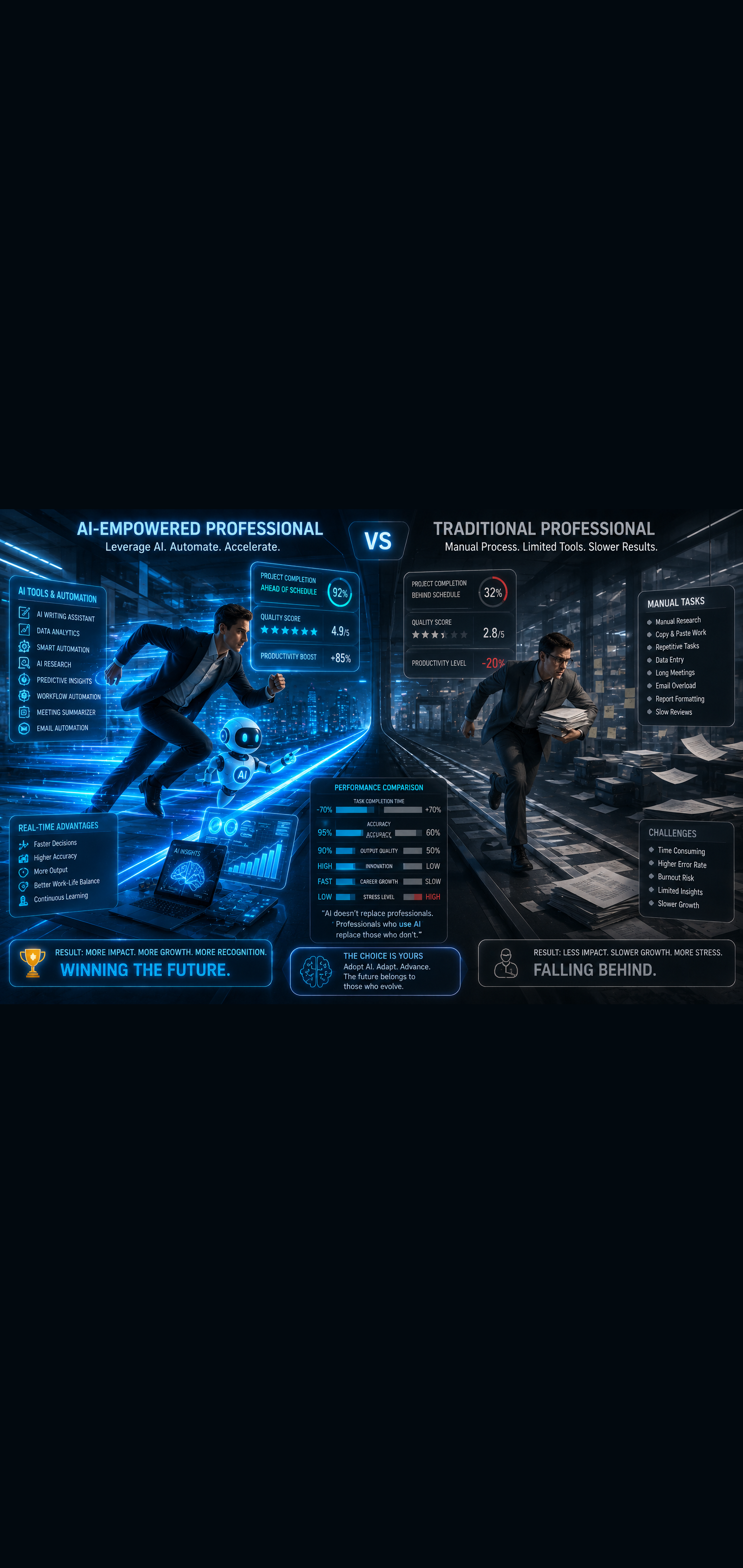
The AI field moves faster than any other professional domain. What is cutting-edge today becomes table stakes in 18 months. The professionals who sustain high incomes are the ones who treat continuous learning as non-negotiable.
Build a learning habit into your weekly routine:
- Follow AI researchers and practitioners on LinkedIn and X
- Read newsletters like The Rundown AI, TLDR AI, and MIT Technology Review
- Spend at least two to three hours per week experimenting with new tools and techniques
- Attend AI conferences or virtual summits to stay connected to the field
Platforms like DeepLearning.AI, Fast.ai, and Hugging Face regularly release new courses and resources. Most of them are free. The investment is your time and attention.
The Mindset That Separates Those Who Make It
Skills and tools matter. But the professionals who move from beginner to high-income fastest all share one trait: they take action before they feel ready.
Most people spend months consuming content without building anything. They watch tutorials instead of starting projects. They research certifications instead of enrolling in them.
The AI career roadmap only works if you actually walk it. Start with stage one this week. Complete one module of one course. Build one small project. Post one update on LinkedIn.
Progress compounds. The gap between where you are and where you want to be closes faster than you think when you show up consistently.
Your Next Step Starts Today
The AI economy is creating generational wealth and career opportunities for the professionals who move with intention. You now have a clear roadmap to follow.
No matter where you are starting from, whether you are a complete beginner or someone with a few skills looking to level up, the path forward is the same. Learn the fundamentals. Build real skills. Create visible work. Pursue opportunities. Specialize. Keep growing.
The best time to start was two years ago. The second best time is right now.
Want more insights like this? Subscribe to the AI Success Forum newsletter.