Vector Search vs. the Bolt-On Stack: Why Oracle Is Quietly Rewriting the Database Playbook in 2026
🗄️ AI News
Vector Search vs. the Bolt-On Stack: Why Oracle Is Quietly Rewriting the Database Playbook in 2026
By AI Success Forum Team · July 9, 2026 · Updated July 9, 2026 · 9 min read
#OracleAIDatabase #VectorSearch #EnterpriseAI #DatabaseArchitecture #AgenticAI #RAG #DataEngineering #AIInfrastructure #Oracle26ai

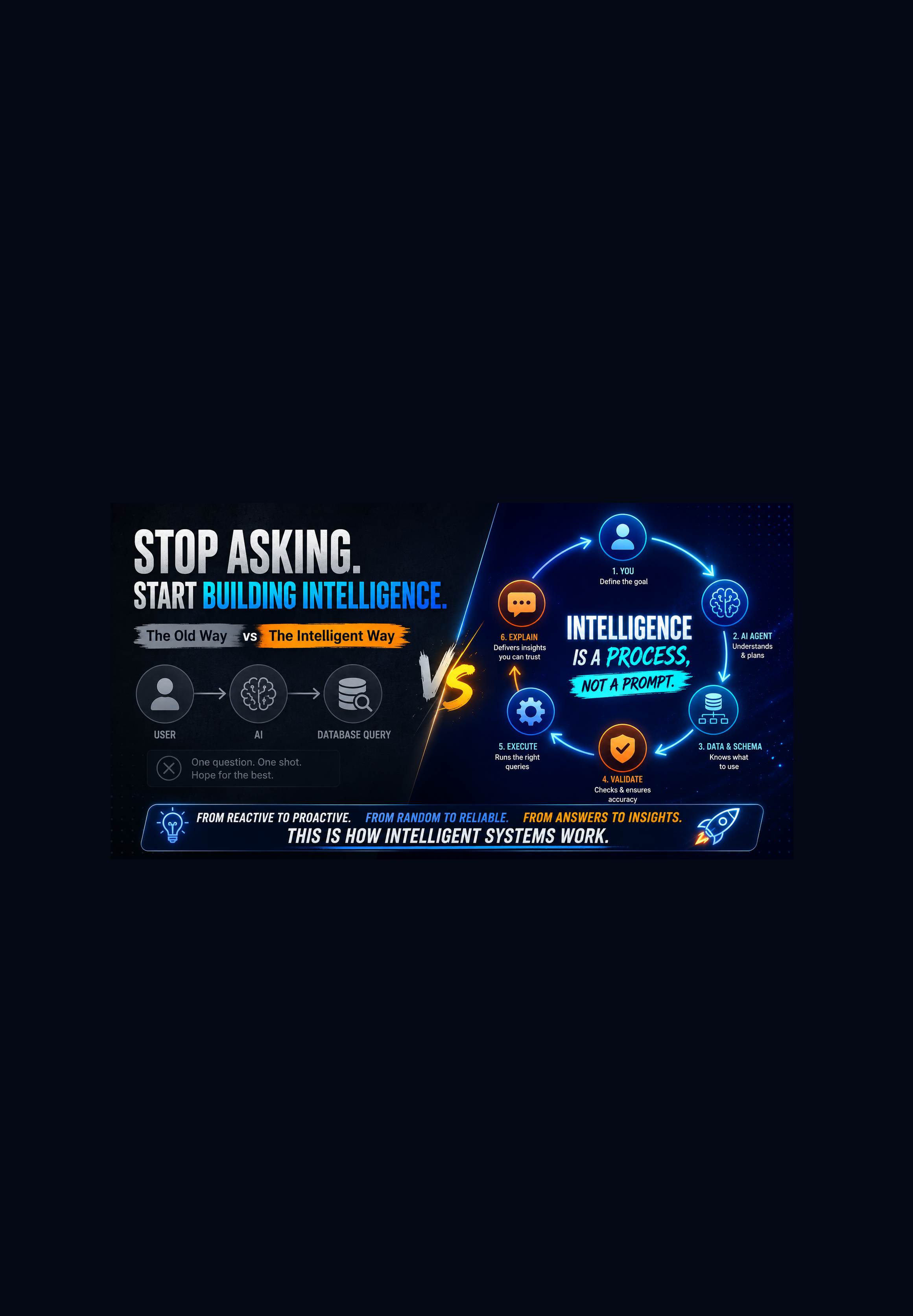
For the last three years, building an AI application meant assembling a small zoo of infrastructure. A relational database for transactions. A separate vector database for embeddings. A caching layer. A pipeline to keep them all in sync.
Every one of those seams was a place where data drifted, latency crept in, and someone eventually got paged at 2 a.m.
That pattern is quietly dying.
In short: Oracle AI Database 26ai folds vector search, JSON handling, graph queries, and AI agent orchestration directly into the core database engine, with no external vector store and no separate sync pipeline. It's a bet that the next generation of enterprise AI will be built on fewer, more consolidated systems rather than more specialized ones, and early adoption numbers suggest that bet is landing.
What Actually Changed: The Database Stopped Being "Just" a Database
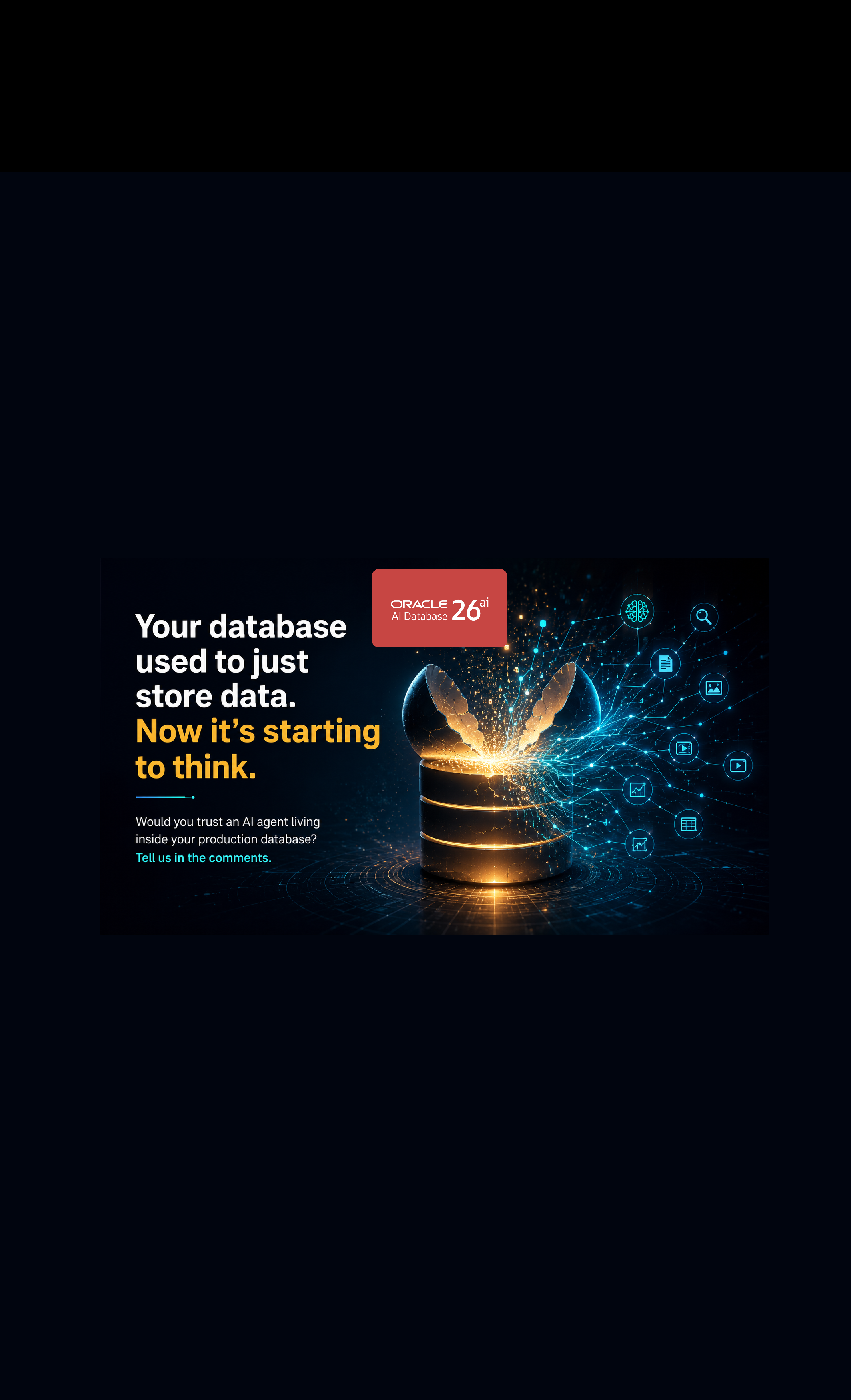
Oracle AI Database 26ai, released for on-premises Linux x86-64 environments in January 2026, replaces Oracle Database 23ai as the company's long-term support release. It ships with more than 300 new features, and the organizing idea behind almost all of them is the same: stop treating AI as something that happens next to the database, and start treating it as something that happens inside it.
Here's the part most people get backwards. They assume "AI database" means a database with a chatbot bolted on top. What Oracle actually did was more structural: it added a native VECTOR data type, built-in embedding generation, and agent orchestration as first-class citizens of the SQL engine itself, sitting alongside rows, JSON documents, and graph structures in the same table, under the same security model.
That distinction, AI-native versus AI-adjacent, is the thesis of this entire release, and it's worth taking seriously, because it changes who needs to build what.
The End of the Bolt-On AI Stack
For most of the last decade, adding AI capability to an enterprise application looked like this: stand up a specialized vector database (Pinecone, Weaviate, Milvus, or Postgres with the pgvector extension), write an ETL job to keep it synchronized with your system of record, and hope the two never drift out of alignment during a traffic spike.
Oracle's pitch is that this entire category of infrastructure becomes unnecessary. AI Vector Search lets a single SQL query blend vector similarity search with relational filters, JSON predicates, full-text search, and graph traversal, retrieving documents, images, audio, and structured rows together, from one system, in one query.
The efficiency gains aren't just architectural. Oracle's own benchmarks describe binary and sparse vector formats delivering up to 32x lower storage usage and roughly 40x faster distance calculations compared to standard float-based vectors: numbers that matter a great deal once you're indexing millions of embeddings rather than a demo dataset of a few thousand.
For a CTO weighing infrastructure decisions, that's not a marginal improvement. It's a smaller bill of materials, one fewer system to patch, and one fewer place where a security review can go wrong.
Inside the Toolbox: What's Actually New in 26ai
A few of the capabilities matter more than the rest for anyone actually building on top of this release:
- Unified Hybrid Vector Search. A single query can combine vector similarity with relational, text, JSON, spatial, and graph predicates, retrieving mixed-media results (PDFs, images, video, table rows) in one pass.
- Select AI Agent. Agents become objects you define and govern inside the Autonomous AI Database itself, using in-database tools, REST calls, or Model Context Protocol (MCP) servers, rather than living in a separate orchestration layer.
- JSON-Relational Duality. The same underlying data can be read and written as either relational rows or JSON documents, with one source of truth instead of two representations to keep in sync.
- Property Graph queries in standard SQL. Relationship analysis (the kind previously requiring a dedicated graph database) now runs as native SQL/PGQ queries over existing data.
- True Cache. An application-transparent, transactionally consistent read cache that behaves like a database-aware Redis, cutting read latency without giving up full SQL semantics.
- Private AI Services Container. Organizations can run embedding and inference workloads privately, without routing sensitive data to a third-party AI provider, a detail that matters enormously for regulated industries. Notice the shared logic across all six: each one takes a job that used to require a separate specialized system and pulls it back inside the database boundary.
Old Stack vs. AI-Native Stack
| Capability | Legacy Approach (pre-2025) | Oracle AI Database 26ai |
|---|---|---|
| Vector search | Separate vector DB (Pinecone, Weaviate, pgvector) synced via ETL | Native VECTOR type, queried in the same SQL statement as relational data |
| AI agents | External orchestration framework, custom state management | Select AI Agent runs and governs agents inside the database |
| Semi-structured data | Duplicate JSON store alongside relational tables | JSON-Relational Duality: one copy, two access patterns |
| Read scaling | Bolt-on cache (e.g., Redis) with manual invalidation logic | True Cache, transactionally consistent and application-transparent |
| Data governance for AI | Manual row/column rules layered on top | Built-in Data Privacy Protection with dynamic masking for users and agents alike |
The takeaway from this table is the same one from the section above it: consolidation, not addition, is the direction enterprise data architecture is moving in.
Who's Actually Threatened Here
It would be an overstatement to say specialized vector databases are finished. Pinecone, Weaviate, and Milvus still offer flexibility that a general-purpose database may not match for greenfield, cloud-native startups with no existing Oracle footprint.
But for the much larger population of enterprises that already run Oracle for transactional workloads (banks, insurers, healthcare systems, government agencies), the calculus shifts hard. If your system of record is already Oracle, standing up a second system just to store embeddings starts to look like unnecessary risk rather than best practice.
Industry analysts covering the release have described it as the biggest architectural shift in Oracle's database line since the multitenant architecture introduced in Oracle 12c back in 2013. That's a strong claim, but it's a defensible one: this isn't a feature update, it's a repositioning of what the database is for.
The DBA's New Job Description
If you're a database administrator, this release doesn't just add features to learn. It changes what "keeping the database healthy" means day to day.
- Vector memory sizing. A new
VECTOR_MEMORY_SIZEinitialization parameter needs to be tuned the same way DBAs already size SGA and PGA. Get it wrong and vector query performance suffers. - Unified Auditing is now mandatory. Legacy auditing modes are removed entirely in 26ai, so any organization still on older audit policies needs to migrate before upgrading, not after.
- CDB/PDB architecture is required. Non-container database configurations are no longer supported, which means migration planning (not just a version bump) is unavoidable for organizations still running older non-CDB instances.
- AI-assisted diagnostics. AWR, ASH, and ADDM reports now surface AI-generated tuning suggestions, shifting part of the DBA's job from manual analysis toward reviewing and validating automated recommendations.
Action Items
If you run a team:
-
Audit your current AI stack for redundant vector infrastructure that could realistically be consolidated into your existing Oracle estate.
-
Budget migration time, not just licensing cost. The CDB/PDB requirement and Unified Auditing mandate mean this is an architecture project, not a patch.
-
Pilot on the free tier first. Oracle AI Database Free (available for Mac, Windows, Linux, and Arm) lets your team validate the vector search and RAG workflow before committing production infrastructure.
-
Reassess vendor contracts for standalone vector database services if your core transactional data already lives in Oracle. If you're an IC (developer or DBA):
-
Learn the VECTOR data type and hybrid query syntax now. Demand for these skills is already climbing among teams migrating off Oracle 19c.
-
Get comfortable with Select AI Agent and MCP server integration, since agent orchestration is moving inside the database rather than staying in a separate framework.
-
Practice sizing
VECTOR_MEMORY_SIZEin a sandbox environment before you're asked to do it under production pressure. -
Revisit your audit policies if your organization still relies on legacy (non-Unified) auditing. It won't carry over.
A Few Honest Answers
Does Oracle AI Database 26ai replace my existing vector database entirely? Not automatically. You'll still need a migration plan, but architecturally, yes, it's designed to make a standalone vector database unnecessary for organizations already running Oracle.
Is this only useful for huge enterprises? No. Oracle AI Database Free is available for Mac, Windows, Linux, and Arm, and includes the same AI Vector Search and JSON Duality features at a smaller resource footprint, so individual developers can prototype on it as well.
Do I have to upgrade my database version to get these features? For customers already on Database 23ai, Oracle has said the transition is a release update rather than a full database upgrade, with no application recertification required.
Does this send my private data to an external AI provider? Not by default. The Private AI Services Container lets organizations run embedding and inference workloads internally, which is specifically aimed at regulated industries that can't send data externally.
What happens to specialized vector database startups? They likely retain an edge for greenfield, cloud-native companies with no existing Oracle investment. But for enterprises already standardized on Oracle, the incentive to run a second, separate vector store weakens considerably.
Bottom line: The future of enterprise AI infrastructure isn't more specialized systems stitched together. It's fewer systems doing more, natively. Oracle didn't just add AI features to a database. It bet that AI belongs inside the database boundary, and 2026 is the year enterprises start finding out if that bet was right.