How to Overcome Fear of AI and Turn It Into Opportunity
How to Overcome Fear of AI and Turn It Into Opportunity
Fear is a natural response to change. And AI is arguably the biggest change most working professionals have faced in their lifetime. So if you feel anxious, uncertain, or even threatened by the rise of artificial intelligence, you are not alone and you are not overreacting.
But here is what matters most. Fear left unexamined becomes paralysis. And paralysis in a fast-moving world has real consequences. The good news is that the same energy behind your fear can be redirected into something far more useful. This guide will help you understand where AI fear comes from, dismantle the stories keeping you stuck, and build a practical path that turns anxiety into genuine opportunity.
Why So Many People Fear AI (And Why That Fear Makes Sense)
Before you can move past fear, you have to take it seriously. Dismissing it with "just learn to adapt" is unhelpful advice that ignores the very real concerns people carry.
The most common fears around AI include:
- Job displacement – the worry that AI will eliminate your role entirely
- Skill obsolescence – the feeling that everything you have built your career on is becoming irrelevant
- Information overload – not knowing where to start or who to trust in a field that changes weekly
- Feeling left behind – watching others seem to adapt effortlessly while you feel stuck
Every one of these fears has a kernel of truth. AI is changing job functions. Some skills are becoming less valuable. The information landscape is genuinely overwhelming. These are not irrational anxieties. They are reasonable responses to a world shifting faster than most people are prepared for.
Acknowledging that is the first step toward doing something about it.
The Difference Between Fear and Reality
Fear tends to paint the most extreme possible picture. It tells you that AI will replace everything, that your skills mean nothing, and that the window to adapt has already closed. None of that is accurate.
The reality is more nuanced and significantly more hopeful.
AI is not replacing humans wholesale. It is replacing specific tasks within human roles. The professionals who understand this distinction are the ones reorienting their careers with clarity instead of panic. A writer who fears AI is not being replaced by it. A writer who does not use AI is being outcompeted by one who does.
Research from the World Economic Forum and other major institutions consistently shows that AI will create more new roles than it eliminates. The skills in highest demand going forward are not purely technical. Critical thinking, creativity, emotional intelligence, complex problem solving, and the ability to work alongside AI tools are the competencies that will define career success.
You likely already have the foundation. What you need is the updated layer on top of it.
How to Overcome Fear of AI: Reframing the Narrative
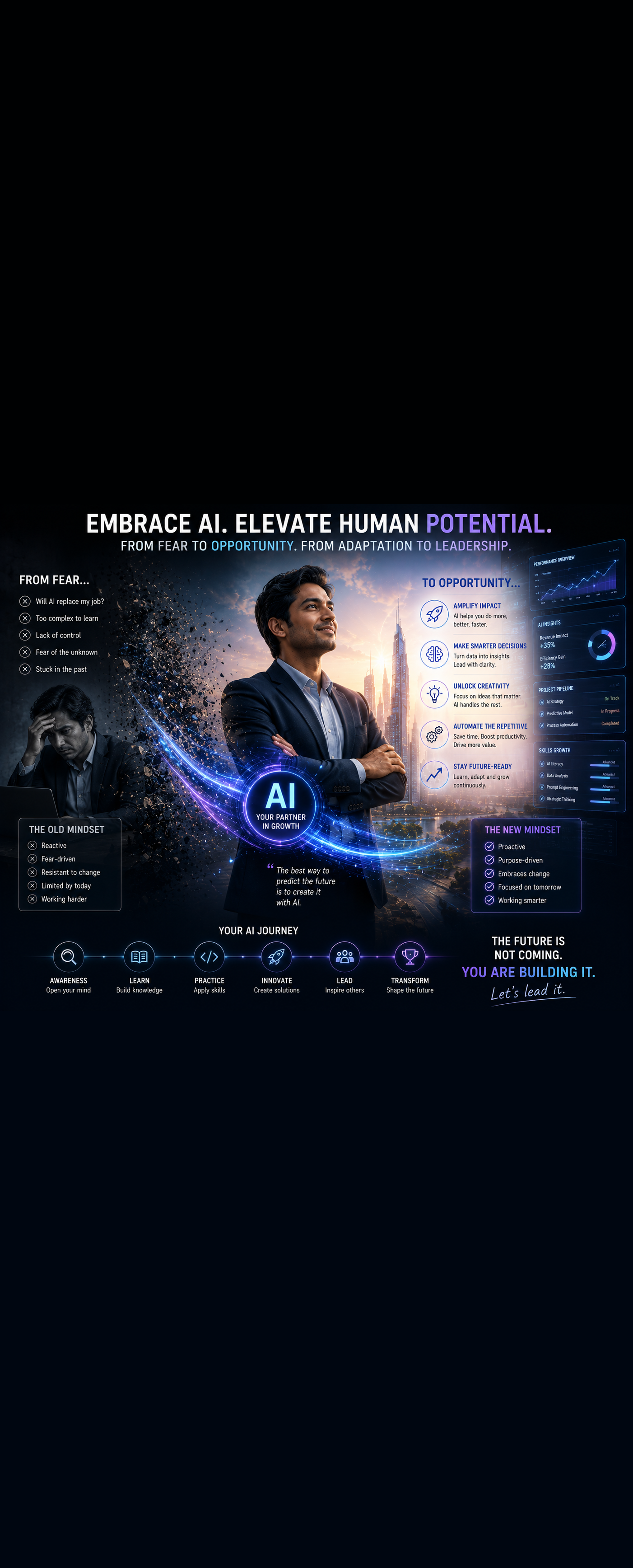
The most powerful shift you can make is moving from a threat mindset to an opportunity mindset. This is not toxic positivity. It is a strategic reorientation based on where the actual leverage is.
Ask yourself this question honestly: Would you rather be the person who spent the next 12 months being afraid of AI, or the person who spent those same 12 months building real fluency with it?
The timeline is the same. The outcome is completely different.
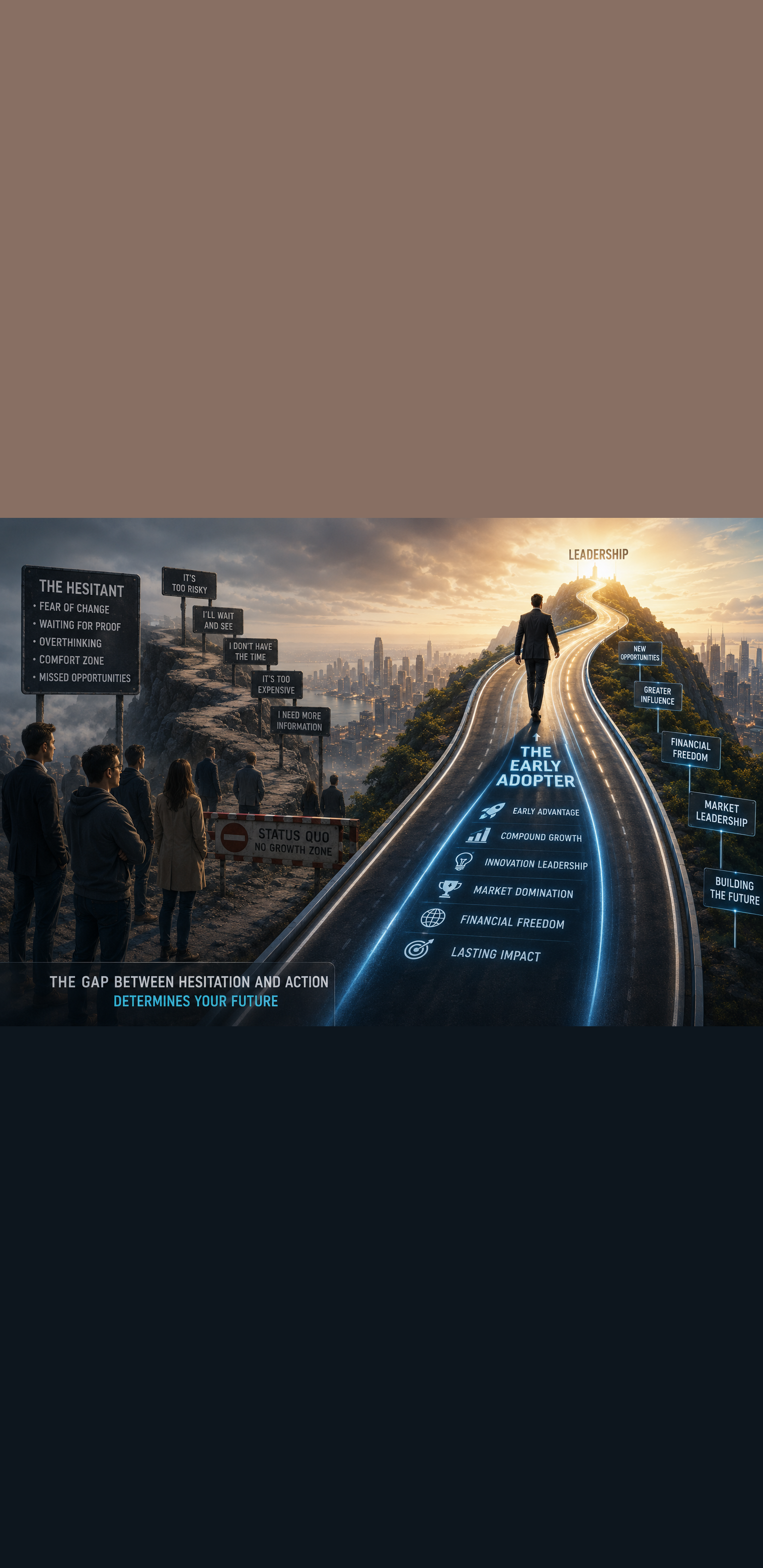
Every major technological shift in history produced two groups of people. Those who waited to see what would happen, and those who moved toward the change and built expertise inside it. The second group did not have less fear. They had a different relationship with it. They used the discomfort as a signal to act rather than a reason to retreat.
You can make that same choice right now.
Practical Strategies to Overcome Your Fear of AI
Understanding fear intellectually is useful. But what actually moves the needle is action. Here are concrete strategies that work.
Strategy 1: Get Specific About What You Are Actually Afraid Of
Vague fear is the hardest kind to deal with. It fills the entire horizon. When you get specific, it becomes manageable.
Write down your three biggest AI-related fears in one sentence each. Then, for each one, ask: "Is this definitely true, probably true, or possibly true?" You will find that most fears live in the "possibly" category. Possible outcomes deserve preparation, not paralysis.
Knowing exactly what you fear lets you research it directly, find evidence that contradicts it, and identify the specific skills that would make that outcome less likely.
Strategy 2: Start With Curiosity Instead of Commitment
You do not have to commit to becoming an AI expert to start moving. Curiosity is a much lower bar and it is enough to get you going.
Spend 15 minutes exploring one AI tool with no agenda. Not to learn it, not to master it, just to see what it does. ChatGPT, Claude, or any tool relevant to your field. Approach it the way you would approach a conversation with someone interesting at a networking event. Open, exploratory, low pressure.
Curiosity builds familiarity. Familiarity reduces fear. That is a psychological fact, not a motivational slogan.
Strategy 3: Focus on AI as a Tool, Not a Replacement
One of the most effective reframes for fear of AI is shifting how you define the relationship. AI is a tool. A remarkably powerful one, but still a tool. And tools do not replace skilled people. They amplify them.
A calculator did not replace mathematicians. It freed them from manual computation to focus on harder problems. AI operates the same way. It handles the repetitive, the formulaic, the time-consuming. It frees you to do the work that genuinely requires human judgment, creativity, and relationship.
When you see AI as an amplifier of your existing skills rather than a threat to them, the fear changes shape. It becomes something you want to pick up rather than something you want to avoid.
Strategy 4: Build Competence in Small Increments
Competence is the most reliable antidote to fear. And competence does not require a massive leap. It builds through small, consistent actions.
Identify one AI tool directly relevant to your work. Spend 20 minutes a day for two weeks learning and using it. Platforms like Coursera and Udemy offer structured courses that take you from zero to functional in a specific tool without overwhelming you.
At the end of two weeks, you will not be an expert. But you will be someone who has used AI to produce real outcomes in your actual work. That experience is worth more than any amount of passive research or worried deliberation.
Strategy 5: Connect With Others Navigating the Same Shift
Isolation amplifies fear. Community reduces it. Finding even one or two other professionals who are actively learning and discussing AI tools changes the emotional texture of the whole experience.
Online communities, LinkedIn groups, and forums focused on AI in your specific industry are a great starting point. Hearing how others are navigating the same challenges normalizes your experience and often surfaces practical insights you would not find in a course.
Turning Fear Into a Career Advantage
Here is a perspective shift that most people miss entirely. The fact that AI makes you uncomfortable is actually a signal worth paying attention to. It means you understand the stakes. It means you recognize that something significant is happening. That awareness is valuable.
The people most at risk in an AI-driven world are not the ones who are afraid of it. They are the ones who are completely indifferent to it. Complacency is far more dangerous than fear.
Your fear, properly channeled, becomes urgency. And urgency in the right direction produces results.
Professionals who have moved through their AI anxiety and come out the other side with real skills describe a consistent experience. The gap between what they feared and what they found was enormous. The tools were more accessible than expected. The learning curve was shorter than imagined. The career benefits showed up faster than they anticipated.
That experience is available to you. It starts with the decision to treat your fear as a starting point rather than a stopping point.
The Opportunity Hidden Inside the Fear
Every major technological transition creates a window where early movers gain disproportionate advantage. That window is open right now with AI. And it will not stay open indefinitely.
The professionals building AI fluency today are positioning themselves for roles, projects, and income streams that did not exist two years ago. They are not geniuses or tech insiders. They are regular people who decided that moving toward the discomfort was better than waiting on the other side of it.
You have the same option available to you right now.
Overcoming fear of AI is not about eliminating the anxiety entirely. It is about acting in spite of it, building evidence through experience that the fear was larger than the reality, and discovering on the other side that you are far more capable of adapting than you gave yourself credit for.
Conclusion: Fear Is the Starting Line, Not the Finish Line
The goal was never to feel no fear. The goal is to not let fear make your decisions for you.
AI is not going away. Its role in every industry is only going to deepen. The question is not whether to engage with it but how and when. Every day you choose curiosity over avoidance, action over delay, and learning over waiting is a day you are building something real.
Start with one tool. Spend 20 minutes. Solve one real problem. Let the experience speak louder than the fear.
The opportunity is not somewhere down the road waiting for you to feel ready. It is here, right now, available to anyone willing to take the first imperfect step toward it.
Choose one AI tool today, open it, and spend 20 minutes exploring it with curiosity. That single action is how you begin turning fear into your greatest professional advantage.
Want more insights like this? Subscribe to the AI Success Forum newsletter.