How to Build a One-Person AI Business

How to Build a One-Person AI Business
The traditional business model required capital, staff, office space, and years of grinding before it became profitable. That model still exists, but it is no longer the only path. A new kind of business has emerged — lean, digital, highly automated, and run entirely by one person with a laptop and the right AI tools.
The one-person AI business is not a side hustle dressed up with a fancy name. It is a legitimate, scalable business structure that is producing six and seven-figure revenues for solo operators across dozens of industries. The key ingredient is not funding or headcount. It is leverage — and AI provides more leverage per hour than anything that has come before it.
This guide gives you a complete blueprint for building a one-person AI business from scratch, covering everything from choosing your model to automating your operations so the business runs without burning you out.
Why the One-Person AI Business Model Works Now
Three forces have converged to make this model viable in a way it simply was not five years ago.
AI tools have reached production quality. ChatGPT, Claude, Midjourney, and dozens of specialized tools can now handle writing, research, design, customer communication, and analysis at a level that would have required a team of specialists not long ago.
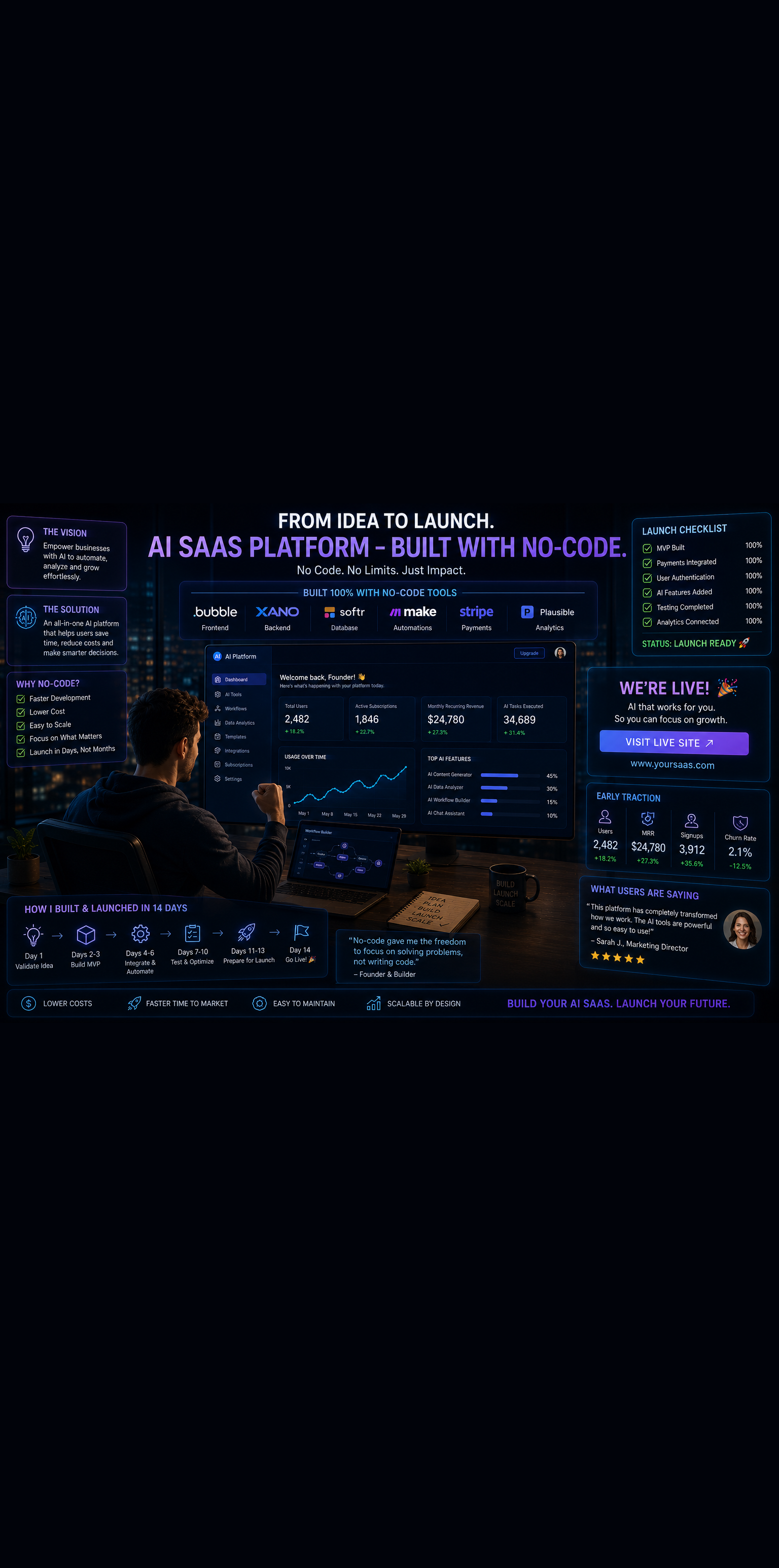
No-code platforms have matured. Tools like Zapier, Make, Notion, and Webflow allow a non-technical founder to build automated workflows, functional websites, and operational systems without writing a single line of code.
The market for digital services and products is global and growing. A one-person business can reach and serve customers anywhere in the world, at any hour, with automated delivery and support systems that do not require the owner to be present.
Put these three forces together and you have the conditions for a business that is small by design but powerful in output.
Step 1: Choose the Right Business Model
Not every business model suits a solo operator. The best one-person AI business models share three characteristics: low overhead, digital delivery, and strong automation potential. Here are the most viable options.
Service Business with AI Leverage
You deliver a professional service — writing, design, marketing, consulting, coaching — but use AI to produce faster, better output than a traditional provider could. This model generates income quickly and requires no upfront product development.
The risk is time dependency. If you stop working, income stops. The goal is to systematize your service delivery so it runs closer to a productized model over time.
Productized Service
A productized service is a fixed-scope, fixed-price offering that you deliver the same way every time. Instead of custom projects, you offer a defined package — "AI-powered blog setup for SaaS companies" or "monthly social media content pack for restaurants."
This is the sweet spot for a one-person AI business. The scope is clear, the workflow is repeatable, and AI handles much of the execution. You can serve multiple clients simultaneously without proportionally increasing your hours.
Digital Products
Ebooks, templates, prompt libraries, courses, frameworks, and tools are created once and sold indefinitely. AI accelerates the creation process and keeps your ongoing time investment minimal once the product is live.
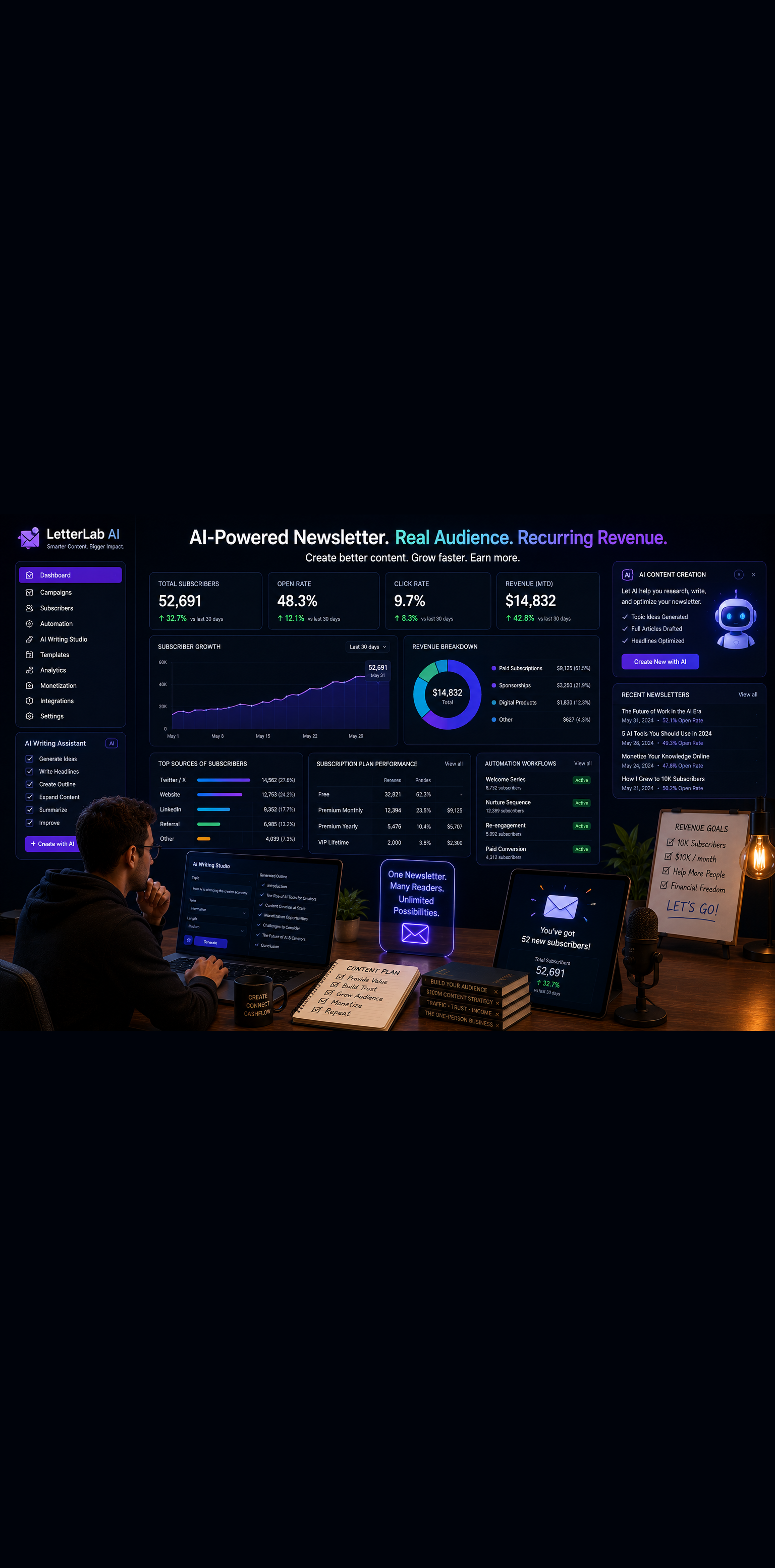
The challenge is distribution — you need an audience or a traffic strategy to generate consistent sales. Pair digital products with a newsletter, a blog, or a social media presence to create a demand engine that runs in the background.
SaaS or Micro-Tool
Using no-code platforms and AI API integrations, solo founders are building small software tools for specific niches — an AI proposal generator for architects, an automated reporting tool for marketing agencies, a content brief builder for SEO teams.
This model has the highest ceiling and the longest build time. It is best pursued after you have cash flow from a service or product model funding the development runway.
Step 2: Build a Lean Tech Stack
One of the biggest operational mistakes solopreneurs make is over-tooling. Too many subscriptions, too much complexity, and too much time managing software instead of doing work.
A lean, well-chosen tech stack for a one-person AI business covers five core functions.
AI Core: ChatGPT Plus or Claude Pro
This is your primary thinking and production tool. Use it for drafting, research, brainstorming, client communication, content creation, and problem solving. One of these subscriptions covers the majority of your AI workload.
Automation: Zapier or Make
These platforms connect your tools and automate repetitive workflows without code. New client inquiry triggers a welcome email sequence. Completed payment triggers onboarding document delivery. Published blog post triggers social media sharing. Once built, these automations run without you.
Start with two or three automations that eliminate your most repetitive manual tasks. Add more as you identify new opportunities.
Project and Knowledge Management: Notion
Notion serves as your operating system — client management, project tracking, content calendar, SOPs, meeting notes, and personal knowledge base all in one place. Notion AI adds another layer of assistance directly inside your workspace.
A well-structured Notion setup means you never lose track of what needs to happen, even when you are juggling multiple clients or projects.
Client Communication and Scheduling: Gmail plus Calendly
Keep client communication simple. A professional Gmail setup and Calendly for scheduling handles 90% of client interaction without custom software. Pair with a simple CRM like HubSpot Free or Notion's built-in database to track leads and client status.
Payments and Contracts: Stripe plus HelloSign or Docusign
Professional payment processing and digital contracts make your business feel established from day one. Stripe handles invoicing and subscription payments. HelloSign or a similar tool handles proposals and contracts electronically.
This full stack costs well under $200 per month and covers everything a lean one-person AI business needs to operate professionally.
Step 3: Systematize Your Core Workflows with AI
The difference between a solo operator who is always busy and one who is actually building a scalable business comes down to systems. Every repeatable task in your business should have a documented process, and most of those processes should involve AI.
Build Your Client Onboarding System
New client onboarding sets the tone for the entire relationship. Use AI to create a welcome email sequence, a client questionnaire, an onboarding guide, and a project kickoff template that you send to every new client automatically.
Once built, this system runs without your manual involvement. The client feels well taken care of. You save hours of repetitive communication.
Create Reusable AI Prompt Libraries
Every service you deliver repeatedly should have a library of tested prompts that produce consistent, high-quality output. Writing prompts, research prompts, analysis prompts, communication prompts — organize these in Notion and refine them over time.
This is one of the most valuable assets you will build in your business. A strong prompt library means new types of work get done faster, quality is consistent, and you can eventually hand processes to a part-time contractor without losing output quality.
Standardize Your Delivery Process
Map out every step of your core service delivery from kickoff to completion. Identify every step that involves manual effort and ask whether AI, automation, or a template can handle it instead.
The goal is not to remove yourself from the work entirely. It is to remove yourself from the parts of the work that do not require your judgment, creativity, or relationships.
Automate Client Reporting and Updates
Clients want to feel informed and confident their project is progressing. Build a lightweight reporting template that AI helps you populate quickly — key progress updates, metrics, next steps, and notes. Send it on a consistent schedule.
This habit builds client trust, reduces check-in emails, and positions you as a structured professional rather than a solo operator winging it.
Step 4: Build Your Audience and Lead Generation Engine
A one-person business lives or dies by its pipeline. You need a consistent flow of potential clients or customers without spending all your time on sales.
Content Marketing as Your Primary Engine
Publishing consistent, valuable content is the most sustainable lead generation strategy for a solo operator. It compounds over time, works while you sleep, and attracts clients who are already pre-sold on your expertise before they contact you.
Use AI to accelerate content production — blog posts, LinkedIn articles, newsletters, social posts. Apply your own expertise and voice to make the content genuinely useful. Publish consistently on one or two platforms rather than sporadically across many.
Build an Email List from Day One
Your email list is the one audience you own. Social platforms change algorithms. SEO rankings shift. Your email list stays yours.
Offer a genuinely useful lead magnet — a free template, a mini guide, a checklist, a short email course — that attracts exactly the type of person you want to work with. Use AI to build it quickly. Grow it consistently.
Even a small, engaged list of a few hundred people in the right niche can sustain a one-person service business with the right monetization strategy.
Referrals and Partnerships
Happy clients and strategic partners are among the most powerful lead sources available to a solo operator. Build referral follow-up into your client offboarding process. Develop relationships with complementary service providers who serve the same clients you do.
A single strong referral partner who consistently sends you warm introductions can fill your pipeline with minimal ongoing effort.
Step 5: Protect Your Time and Energy
The biggest failure mode in a one-person business is not lack of clients or revenue. It is the owner burning out because they never built the boundaries and systems that protect their most valuable resource — their capacity to think, create, and deliver.
Design Your Work Week Intentionally
Decide in advance how many hours you will work, when you will be available to clients, and which days are protected for deep work versus administrative tasks. Use your calendar as a commitment device, not just a scheduling tool.
AI handles a significant portion of your execution load. That only creates sustainable leverage if you protect the space that strategic thinking and high-value work require.
Set Clear Client Boundaries
Scope creep, after-hours messages, and poorly defined deliverables drain the solo operator faster than anything else. Use clear contracts, defined communication channels, and explicit response time expectations from the start of every client relationship.
It is far easier to maintain professional boundaries from the beginning of a relationship than to establish them after a pattern of unlimited availability has already been set.
Build a Financial Buffer Before You Scale
One-person businesses are vulnerable to income volatility. Before you increase your lifestyle expenses or take on significant overhead, build three to six months of operating expenses in a business savings account.
This buffer gives you the psychological freedom to turn down bad-fit clients, invest in growth, and weather slow periods without making decisions from scarcity.
Step 6: Scale Without Hiring
The natural instinct when a one-person business gets busy is to hire. Sometimes that is the right move. Often, it is premature — and there are better options for a solo operator who wants to stay lean.
Raise Your Prices
The simplest way to scale revenue without increasing hours is to charge more. If you are consistently at capacity, your prices are too low. Raise them for new clients. Migrate existing clients to new rates at renewal.
Higher prices also attract better clients — ones who respect your time, value your expertise, and cause fewer problems.
Productize More of Your Offering
Move higher-touch, time-intensive services toward more systematized, productized formats. Replace custom projects with fixed-scope packages. Replace live consulting hours with recorded courses or asynchronous coaching formats.
Each productization move increases the revenue you can generate per hour of your time.
Use Contractors Strategically
When you genuinely need more capacity, bring in specialized freelancers for specific, defined tasks rather than hiring employees. A part-time editor, a virtual assistant for administrative work, or a specialist for overflow projects gives you flexibility without the overhead and management complexity of a full-time hire.
Keep your core business model and client relationships firmly in your own hands. Delegate execution, not strategy.
The Mindset of a Successful One-Person AI Business Owner
Building a one-person business is as much a psychological challenge as a strategic one. A few mindset principles make the difference between those who build something lasting and those who burn out or give up.
Think like a systems designer, not a freelancer. Every process you build frees future time and creates leverage. Every shortcut you take today costs you double tomorrow.
Protect your reputation obsessively. In a one-person business, your reputation is your brand, your marketing, and your competitive advantage rolled into one. Deliver what you promise. Under-promise and over-deliver. Handle problems with speed and honesty.
Invest in yourself continuously. Your knowledge, skills, and judgment are the primary assets of a one-person business. Treat learning as a non-negotiable operating expense, not a luxury for when things slow down.
Conclusion: One Person, the Right Tools, Unlimited Potential
The one-person AI business is not a compromise. It is a deliberate choice to build something lean, profitable, and aligned with the life you actually want to live. No investors to answer to, no staff meetings, no office politics — just you, your expertise, your systems, and a set of AI tools that amplify everything you do.
The blueprint is in front of you. Choose your model, build your stack, systematize your operations, and protect your time. Then execute consistently and let the compounding begin.
Start lean. Stay intentional. Build something worth owning.
Want more insights like this? Subscribe to the AI Success Forum newsletter.