Future-Proof Yourself: The Skills Every Professional Needs
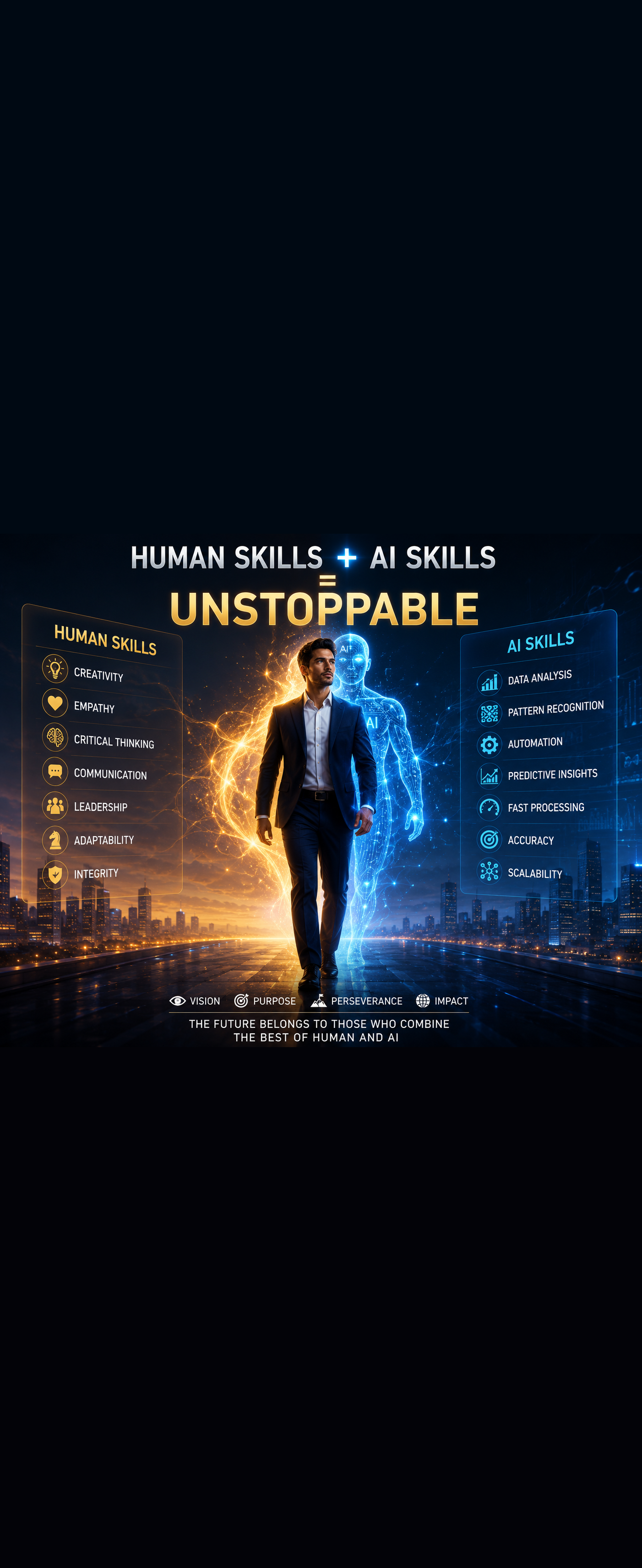
Future-Proof Yourself: The Skills Every Professional Needs
Technology is changing faster than most career advice can keep up with. Jobs that existed five years ago are being automated. New roles are appearing that nobody had a title for a decade ago. And AI is accelerating every part of this shift in ways that feel impossible to predict.
But here is what is predictable. Certain skills will always be valuable, regardless of what the next technological wave looks like. And the professionals who build these skills now, combined with smart use of AI tools, will not just survive the changes ahead. They will lead through them.
This guide breaks down exactly which skills future-proof your career and how to build them starting today.
Why Most Professionals Are Not Future-Proof Yet
The honest truth is that most professionals are one or two technological shifts away from having their current skill set become outdated. Not because they are not talented, but because they have not been building the right foundation.
Specializing too narrowly in one tool, one platform, or one process is a vulnerability. When that tool changes or disappears, the specialist has to start over. The professionals who consistently thrive across decades are not the ones who mastered a single thing. They are the ones who built adaptable, transferable skills underneath everything they do.
Future-proofing is not about predicting the future. It is about building the kind of foundation that holds regardless of what the future brings.
Future-Proof Yourself With These Core Human Skills
The skills most resistant to automation are not technical. They are deeply human. AI can generate content, write code, and analyze data. It cannot replace the professional who knows how to think critically, communicate clearly, and navigate complex human dynamics.
These are the core skills worth investing in right now:
- Critical thinking - the ability to evaluate information, question assumptions, and make sound decisions without being told what to conclude
- Clear communication - written and verbal communication that influences, persuades, and builds trust across any medium
- Emotional intelligence - understanding your own responses and reading other people accurately in professional situations
- Adaptability - the willingness to learn new tools and approaches without resistance or ego
- Creative problem solving - connecting ideas across domains to generate solutions that are not obvious from the data alone
None of these skills will ever be fully automated. And all of them become more valuable as the technical landscape around them keeps shifting.
AI Literacy Is Now a Non-Negotiable Professional Skill
Being comfortable with AI tools is no longer optional for professionals who want to stay relevant. It is quickly becoming the baseline expectation across industries, the way digital literacy became essential in the early 2000s.
AI literacy does not mean you need to learn how to build models or write code. It means you understand how to use AI tools effectively, know their limitations, and can integrate them into your workflow in ways that improve your output.
Practically, this looks like:
- Using tools like ChatGPT, Claude, or Gemini for research, drafting, and ideation
- Understanding how to write effective prompts that get useful results
- Knowing when AI output needs human judgment and when it can be trusted
- Staying current with new tools relevant to your field as they emerge
Professionals who build genuine AI literacy now will be the ones leading teams and projects in five years, while those who avoided it scramble to catch up.
Data Literacy: Understanding the Numbers That Drive Decisions
You do not need to be a data scientist. But every professional needs to be able to read, interpret, and question data in their field.
Decisions in every industry are increasingly driven by metrics, dashboards, and analytics. The professional who can look at data and ask the right questions, spot misleading conclusions, and translate numbers into clear recommendations will always have influence.
Start building data literacy by:
- Learning the basics of data visualization using free tools like Google Looker Studio or Tableau Public
- Taking a short course in data analysis fundamentals on platforms like Coursera or DataCamp
- Practicing by analyzing data relevant to your current role and presenting your findings clearly
AI tools can help enormously here. You can paste data into ChatGPT and ask it to help you interpret trends, spot anomalies, or suggest what questions the data is not yet answering.
Continuous Learning as a Professional Practice
The single most future-proof skill is the habit of learning itself.
Professionals who treat learning as a daily practice rather than something they do when forced to will always stay ahead of those who only update their skills when their current ones become obsolete. By the time the pressure to learn arrives, the window to adapt comfortably has often already closed.
Build a sustainable learning practice by:
- Dedicating 20 to 30 minutes each day to learning something relevant to your field or goals
- Using AI tools to compress and personalize your learning as covered in our previous guides
- Taking structured courses on platforms like Udemy, Coursera, or LinkedIn Learning to build depth in high-value areas
- Following thinkers, researchers, and practitioners in your field who are working at the frontier
The professionals who commit to continuous learning do not just future-proof their current role. They open doors to roles and opportunities that do not even exist yet.
Building a Personal Brand That Outlasts Any Job Title
Your job title can become irrelevant overnight. Your reputation, expertise, and network cannot.
Building a personal brand means consistently demonstrating your knowledge and perspective in public, whether through writing, speaking, creating content, or contributing meaningfully to professional communities. It is the long-term asset that follows you across every role, company, and industry shift.
AI tools make this more accessible than ever. You can use tools like ChatGPT or Claude to help you outline articles, refine your ideas, and repurpose insights from your work into content that builds your professional presence online.
A strong personal brand does three things for your career:
- It attracts opportunities instead of requiring you to chase them
- It signals credibility to employers, clients, and collaborators before you ever speak to them
- It builds a community of peers and followers who amplify your reach and open unexpected doors
Start with one platform. Share one insight per week. Build the habit before you worry about the strategy.
Collaboration and Leadership in a Hybrid AI World
As AI handles more routine tasks, the premium on human collaboration and leadership rises. The professionals who can bring people together, align teams around a shared vision, and navigate conflict productively will be indispensable regardless of how capable AI becomes.
Leadership in the AI era is not about knowing the most. It is about asking the best questions, creating the conditions for great work, and making clear decisions with incomplete information.
If you are not in a formal leadership role, start developing these skills anyway:
- Volunteer to lead projects or initiatives in your current organization
- Practice facilitating conversations and meetings where you focus on drawing out others rather than dominating
- Study how effective leaders communicate during uncertainty and change
The AI era will produce more tools but it will always need more leaders. Becoming one is among the most durable investments you can make in your career.
Your Future-Proof Action Plan
You do not need to build all of these skills at once. That approach leads to overwhelm and inaction. Instead, audit where you stand today and pick the one or two areas where focused effort will create the most impact in your current situation.
Ask yourself:
- Which of these skills would most change my career trajectory if I improved it over the next 12 months?
- Where am I currently most vulnerable if my industry or role shifts significantly?
- What can I start doing this week, even in a small way, to begin building that foundation?
The professionals who thrive through every technological shift are not the ones who predicted it perfectly. They are the ones who built a foundation strong enough to adapt to anything.
Start building yours today.
Want more insights like this? Subscribe to the AI Success Forum newsletter.