Best Python and AI Courses for Beginners
Best Python and AI Courses for Beginners
Python is the language of artificial intelligence. If you want to build AI applications, automate workflows, analyze data, or work with machine learning models, Python is where you start. It is readable, powerful, and supported by the largest ecosystem of AI libraries in existence.
The challenge for beginners is that the learning path is not always obvious. There are hundreds of Python courses and dozens of AI courses, but very few that teach both together in a way that builds genuine, job-ready skills from the ground up.
This guide solves that problem. It covers the best Python and AI courses for beginners in 2026, what each one actually teaches, who it is designed for, and how to build a learning path that takes you from zero to genuinely capable in the shortest realistic time.
Why Learning Python and AI Together Makes Sense
Traditional advice says learn Python first, then worry about AI later. That advice is increasingly outdated.
Modern learners retain more when they can see immediate, meaningful applications for what they are studying. Learning Python in the context of AI projects keeps motivation high, builds practical skills faster, and produces a portfolio of real work rather than a collection of abstract exercises.
The best beginner courses in 2026 reflect this reality. They teach Python fundamentals through AI-relevant examples, introduce libraries like NumPy, Pandas, and Scikit-learn early, and connect syntax and logic to problems that actually matter.
If you have tried to learn Python before and lost interest halfway through a course about building calculators and guessing games, this approach will feel completely different.
What Beginners Actually Need From a Python and AI Course
Before choosing a course, understand what separates genuinely beginner-friendly programs from ones that just claim to be.
- Progressive difficulty: The best courses start simple and build complexity gradually. Courses that jump into advanced concepts too early create confusion that kills motivation.
- Project-based learning: Syntax without application fades fast. Look for courses where you build real projects throughout, not just at the end.
- Clear explanations of why, not just how: Understanding why a concept works the way it does produces better programmers than courses that just teach you to copy patterns.
- Active community support: Forums, Discord channels, and Q&A sections where you can get unstuck matter enormously when you are learning independently.
- Regular updates: Python and AI libraries evolve. A course last updated in 2021 may be teaching deprecated syntax or outdated library versions.
With those criteria established, here are the best courses available right now.
1. Python for Everybody – University of Michigan (Coursera)
Price: Free to audit, Coursera subscription for certificate Duration: Approximately 8 months at a few hours per week Level: Complete Beginner Certificate: Yes, University of Michigan specialization certificate
Python for Everybody, created by Dr. Chuck Severance at the University of Michigan, is the most widely completed Python course in the world and for good reason. It is patient, clear, and structured in a way that genuinely works for people who have never written a line of code before.
The specialization covers Python basics, data structures, web scraping, databases, and data visualization across five courses. By the end, you have a solid foundation in Python that positions you to move directly into AI and data science courses.
Why It Stands Out
Dr. Severance has a rare gift for making programming feel approachable without condescending to students. The course never assumes prior knowledge and never rushes past concepts before students have had time to absorb them. The University of Michigan certificate is recognized by employers and adds genuine credibility to your profile.
Best for: Complete beginners with no programming experience who want a thorough, patient introduction to Python from a credible institution.
2. The Complete Python Bootcamp From Zero to Hero – Udemy
Price: Typically $15 to $20 during frequent Udemy sales Duration: Approximately 22 hours of video content Level: Beginner to Intermediate Certificate: Udemy certificate of completion
Jose Portilla's Python Bootcamp on Udemy is one of the most consistently top-rated programming courses on any platform. It covers Python from absolute basics through object-oriented programming, generators, decorators, and working with external libraries including those used in data science and AI workflows.
The course is fast-paced compared to Python for Everybody, which makes it better suited for learners who pick up new concepts quickly and want to move through fundamentals without spending months on basics.
Why It Stands Out
The depth of coverage relative to the price point is exceptional. At under $20 during a sale, you get a comprehensive Python education that would cost hundreds of dollars through other providers. The course has been completed by over two million students and maintains a consistently high rating, which reflects genuine quality rather than marketing.
Best for: Motivated beginners who want to move through Python fundamentals quickly and are comfortable with a faster learning pace.
3. CS50's Introduction to Programming with Python – Harvard University (edX)
Price: Free to audit, verified certificate available for a fee Duration: Approximately 10 weeks Level: Beginner Certificate: Yes, Harvard certificate via edX
Harvard's CS50P is one of the most rigorous free programming courses available anywhere. It covers Python from the ground up with a focus on computational thinking, problem decomposition, and writing clean, professional code. The course includes lectures, problem sets, and a final project that you build from scratch.
CS50 courses are known for their high standards and genuine intellectual challenge. This is not a course where you passively watch videos. You write real code and solve real problems throughout.
Why It Stands Out
The Harvard name carries significant weight, and the CS50P certificate is one of the most recognized beginner programming credentials available. More importantly, the course produces better programmers than most alternatives because it teaches you to think like a developer, not just copy patterns.
Best for: Academically oriented beginners who want a challenging, rigorous introduction to Python from one of the world's most respected universities.
4. AI Python for Beginners – DeepLearning.AI (Coursera)
Price: Free to audit, Coursera subscription for certificate Duration: Approximately 4 weeks Level: Beginner Certificate: Yes, DeepLearning.AI certificate
Andrew Ng's DeepLearning.AI launched AI Python for Beginners specifically to address the gap between traditional Python courses and AI application. This course teaches Python fundamentals entirely through AI-relevant examples and applications, so every concept you learn is immediately connected to something useful in the AI context.
The course covers variables, functions, loops, and data structures through examples that involve working with AI models, processing text, and automating tasks. It is the best single course available for learners who want to learn Python specifically to work with AI tools.
Why It Stands Out
Most Python courses teach programming in generic contexts. This course teaches programming in the context you actually care about. The AI-native framing makes every concept immediately meaningful and dramatically improves retention compared to courses that treat AI as a distant destination rather than the starting point.
Best for: Beginners who want to learn Python specifically for AI applications and want every concept taught in an immediately relevant context.
5. Python for Data Science and Machine Learning Bootcamp – Udemy
Price: Typically $15 to $20 during Udemy sales Duration: Approximately 25 hours Level: Beginner to Intermediate Certificate: Udemy certificate of completion
Jose Portilla's data science and machine learning bootcamp picks up where his Python fundamentals course leaves off and takes you directly into the libraries and tools that power AI applications. It covers NumPy, Pandas, Matplotlib, Seaborn, Scikit-learn, and introductory deep learning using TensorFlow and Keras.
By the end of this course, you can load datasets, perform exploratory analysis, build classification and regression models, and evaluate model performance. These are the practical skills that data science and AI job descriptions actually list.
Why It Stands Out
The progression from Python basics to working machine learning models is handled better in this course than in almost any other beginner-to-intermediate program. It does not assume a mathematics background and explains the intuition behind each algorithm before introducing the code that implements it.
Best for: Learners who have basic Python familiarity and want to move directly into data science and machine learning with practical, hands-on instruction.
6. Machine Learning Crash Course – Google
Platform: Google Developers Price: Completely free Duration: Approximately 15 hours Level: Intermediate Certificate: Google completion certificate
Google's Machine Learning Crash Course was originally built to train Google employees and is now publicly available. It covers the mathematical and conceptual foundations of machine learning including linear regression, logistic regression, neural networks, and model evaluation using TensorFlow.
The course is more technical than the others on this list and works best for learners who have completed a solid Python fundamentals course first. The exercises are hands-on and the content is grounded in how machine learning is actually applied in production environments.
Why It Stands Out
The internal Google origin makes this course unusually practical. The concepts are taught the way engineers at one of the world's leading AI organizations actually think about them, not the way they are described in academic textbooks.
Best for: Beginners who have completed a Python fundamentals course and want a rigorous, free introduction to machine learning from one of the most credible sources available.
7. Automate the Boring Stuff with Python – Al Sweigart (Free Online and Udemy)
Platform: automatetheboringstuff.com (free) or Udemy Price: Completely free online, Udemy version typically $15 to $20 Duration: Self-paced, approximately 10 to 15 hours Level: Beginner to Intermediate Certificate: Udemy certificate if purchased there
Automate the Boring Stuff with Python is one of the most beloved Python learning resources in existence. Rather than teaching Python abstractly, it teaches you to use Python to automate real tasks including working with spreadsheets, PDFs, web scraping, sending emails, scheduling tasks, and manipulating files.
In the context of AI, automation skills are enormously valuable. Understanding how to write scripts that handle repetitive tasks is foundational to building AI-powered workflows that save real time in real jobs.
Why It Stands Out
The practical immediacy of this course is unmatched. From the first few chapters, you are writing scripts that actually do useful things. That sense of immediate utility keeps motivation high and builds confidence faster than any course that spends weeks on abstract fundamentals before producing anything tangible.
Best for: Beginners who want to build practical automation skills alongside Python fundamentals, particularly those in non-technical roles who want to use Python to work smarter rather than become full-time developers.
8. Introduction to Python for Data Science – Microsoft (edX)
Price: Free to audit, verified certificate available for a fee Duration: Approximately 6 weeks Level: Beginner Certificate: Yes, Microsoft certificate via edX
Microsoft's Introduction to Python for Data Science covers Python basics, NumPy, Pandas, and data visualization using Matplotlib. It is specifically designed for professionals who want to use Python for data analysis rather than software development, making it particularly relevant for business analysts, finance professionals, and operations managers who want AI and data skills.
The Microsoft brand adds recognition value, and the content is well-structured and clearly explained at a genuine beginner level.
Why It Stands Out
The data science focus from the very beginning makes this course more immediately relevant for business professionals than general Python courses that spend significant time on concepts that are more useful for software developers than data analysts.
Best for: Business professionals including analysts, finance practitioners, and operations managers who want Python skills specifically for data analysis and reporting.
9. Python and Machine Learning for Financial Analysis – Coursera
Price: Coursera subscription required Duration: Approximately 4 weeks Level: Beginner to Intermediate Certificate: Yes, completion certificate
This course takes a domain-specific approach, teaching Python fundamentals entirely through financial applications. It covers data manipulation, visualization, portfolio analysis, risk modeling, and introductory machine learning applied to financial datasets.
For professionals in finance, investment, accounting, or banking who want to develop Python and AI skills relevant to their specific industry, this course provides a faster path to useful capability than general-purpose alternatives.
Why It Stands Out
Domain specificity accelerates learning. When every example and exercise is drawn from the field you already work in, you spend less cognitive energy translating abstract concepts into practical relevance. Finance professionals who complete this course consistently report being able to apply the skills immediately in their actual jobs.
Best for: Finance, banking, accounting, and investment professionals who want Python and machine learning skills that apply directly to their day-to-day work.
10. Fast.ai Practical Deep Learning for Coders
Platform: fast.ai Price: Completely free Duration: Approximately 7 weeks Level: Beginner to Intermediate Certificate: No formal certificate
Fast.ai takes a top-down approach to teaching deep learning that is fundamentally different from most courses. Rather than building up from mathematical foundations, it starts you building real deep learning applications in the first lesson and explains the underlying theory as you go.
The course covers image classification, natural language processing, recommendation systems, and tabular data modeling using the fastai library built on top of PyTorch. The pedagogy is unconventional but highly effective for learners who get frustrated by courses that spend weeks on prerequisites before doing anything interesting.
Why It Stands Out
Fast.ai has produced more self-taught deep learning practitioners who have gone on to publish research, win competitions, and land AI roles than almost any other free resource. The community around the course is active, supportive, and technically sophisticated.
Best for: Motivated beginners with some Python familiarity who want to build real deep learning applications quickly and are comfortable with a non-traditional learning approach.
The Best Learning Path for Python and AI Beginners
Courses work best when they build on each other deliberately. Here is a recommended sequence based on where you are starting from.
Complete beginner with no coding experience:
Start with Python for Everybody from the University of Michigan to build a solid foundation with a patient, credible instructor. Once you are comfortable with Python basics, move to AI Python for Beginners from DeepLearning.AI to connect your skills to AI applications. Follow that with the Python for Data Science and Machine Learning Bootcamp on Udemy to build hands-on ML skills.
Beginner who wants to move fast:
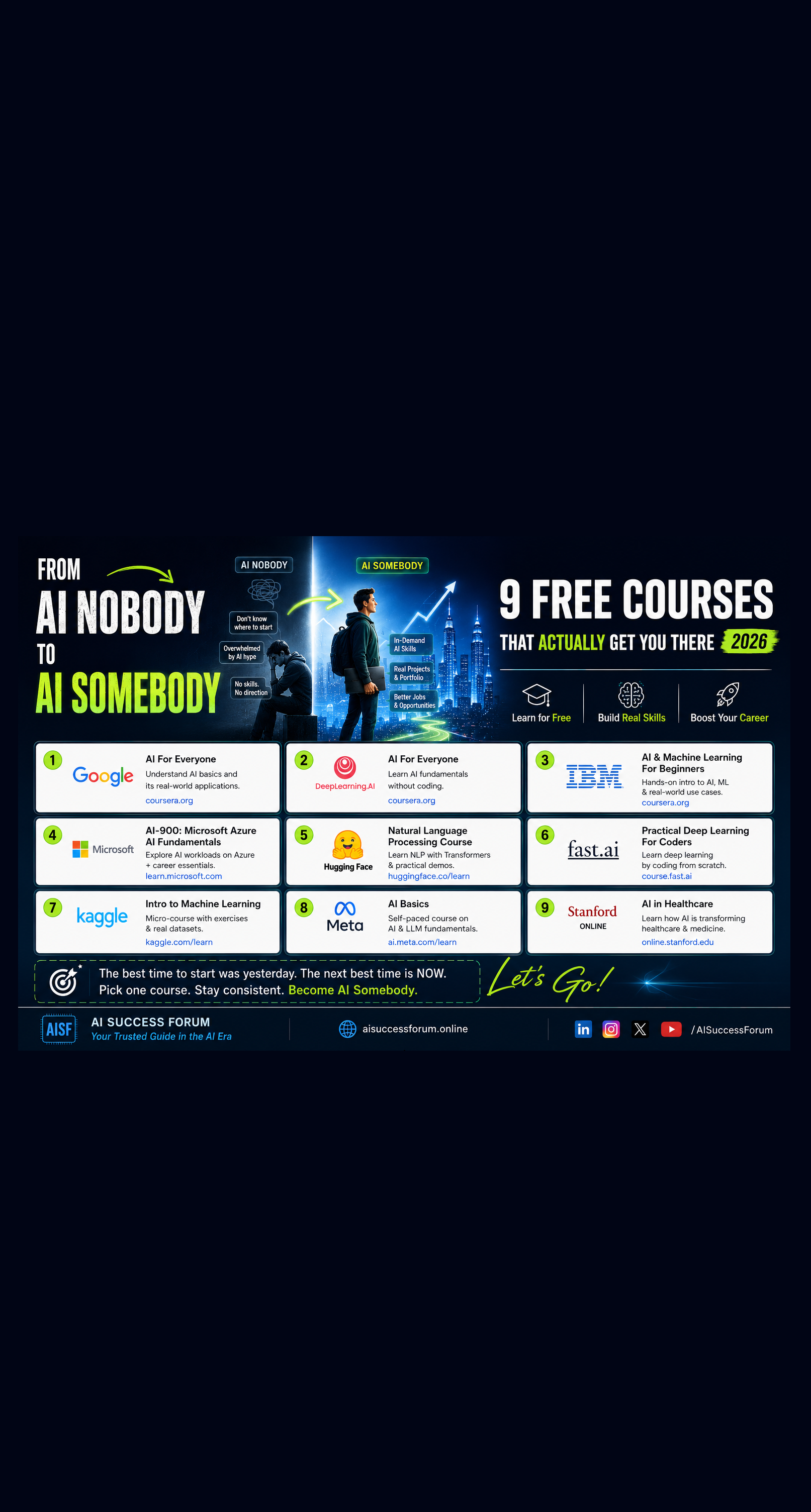
Start with The Complete Python Bootcamp from Jose Portilla on Udemy to get through fundamentals quickly. Immediately follow with the Google Machine Learning Crash Course for a rigorous introduction to ML concepts. Then take Fast.ai Practical Deep Learning to start building real applications.
Business professional who wants practical skills without becoming a developer:
Begin with Automate the Boring Stuff with Python to build immediately useful automation skills. Add Microsoft's Introduction to Python for Data Science for data analysis capability. If you are in finance, substitute or add the Python and Machine Learning for Financial Analysis course for domain-specific application.
Academically oriented learner who wants institutional credentials:
Start with CS50's Introduction to Programming with Python from Harvard for a rigorous, credible foundation. Follow with the University of Michigan Python for Everybody specialization for comprehensive coverage and a strong certificate. Then pursue the IBM AI Engineering Professional Certificate for a recognized advanced credential.
Common Mistakes Beginners Make When Learning Python and AI
Knowing what not to do saves as much time as knowing what to do.
Jumping between courses without finishing any: Course switching is one of the most common reasons beginners stall. Pick one course and complete it before evaluating whether to change direction.
Passive video watching without coding along: Watching someone code is not the same as learning to code. Every video should be paired with your own hands-on practice on the same concepts.
Skipping the uncomfortable parts: The sections you find hardest are the ones that build the most important skills. Skipping them creates gaps that compound into confusion later.
Not building projects outside of course exercises: Course exercises teach you to code in controlled conditions. Personal projects teach you to figure things out independently, which is what real work actually requires.
Waiting until you feel ready before applying skills: You will never feel completely ready. Start using Python to solve small real problems in your own life or work as early as possible. Imperfect application beats perfect preparation every time.
What You Can Do After Completing a Beginner Python and AI Course
Completing even one strong beginner course opens meaningful doors. Here is a realistic picture of what becomes possible.
- Automate repetitive tasks in your current role using Python scripts, saving hours of manual work each week
- Analyze data from spreadsheets, databases, or APIs to produce insights that would previously require a dedicated analyst
- Build simple AI applications using pre-trained models and libraries like Hugging Face Transformers
- Contribute to AI projects within your organization as a technically literate collaborator rather than a passive observer
- Pursue more advanced credentials including cloud provider ML certifications or DeepLearning.AI specializations that require Python foundations
The key insight is that you do not need to become a professional developer to extract enormous career value from Python and AI skills. Even a modest level of technical capability puts you ahead of the vast majority of professionals in most industries.
Conclusion: The Best Time to Start Learning Python Is Right Now
Python and AI skills are compounding assets. The earlier you start building them, the longer they have to grow and the more doors they open over time.
The courses on this list give you every option from free university programs to affordable bootcamps, from patient beginner-friendly introductions to fast-paced practical programs. There is no barrier to starting today except the decision to begin.
Pick the course that fits your starting point, your learning style, and your career goals. Commit to finishing it. Build something with what you learn. Then move to the next level.
The professionals who invested in Python and AI skills five years ago made career decisions that look brilliant today. The professionals who start now are making the same kind of decision.
Want more insights like this? Subscribe to the AI Success Forum newsletter.