Coursera vs Udemy: Which Platform Is Better for AI Learning?
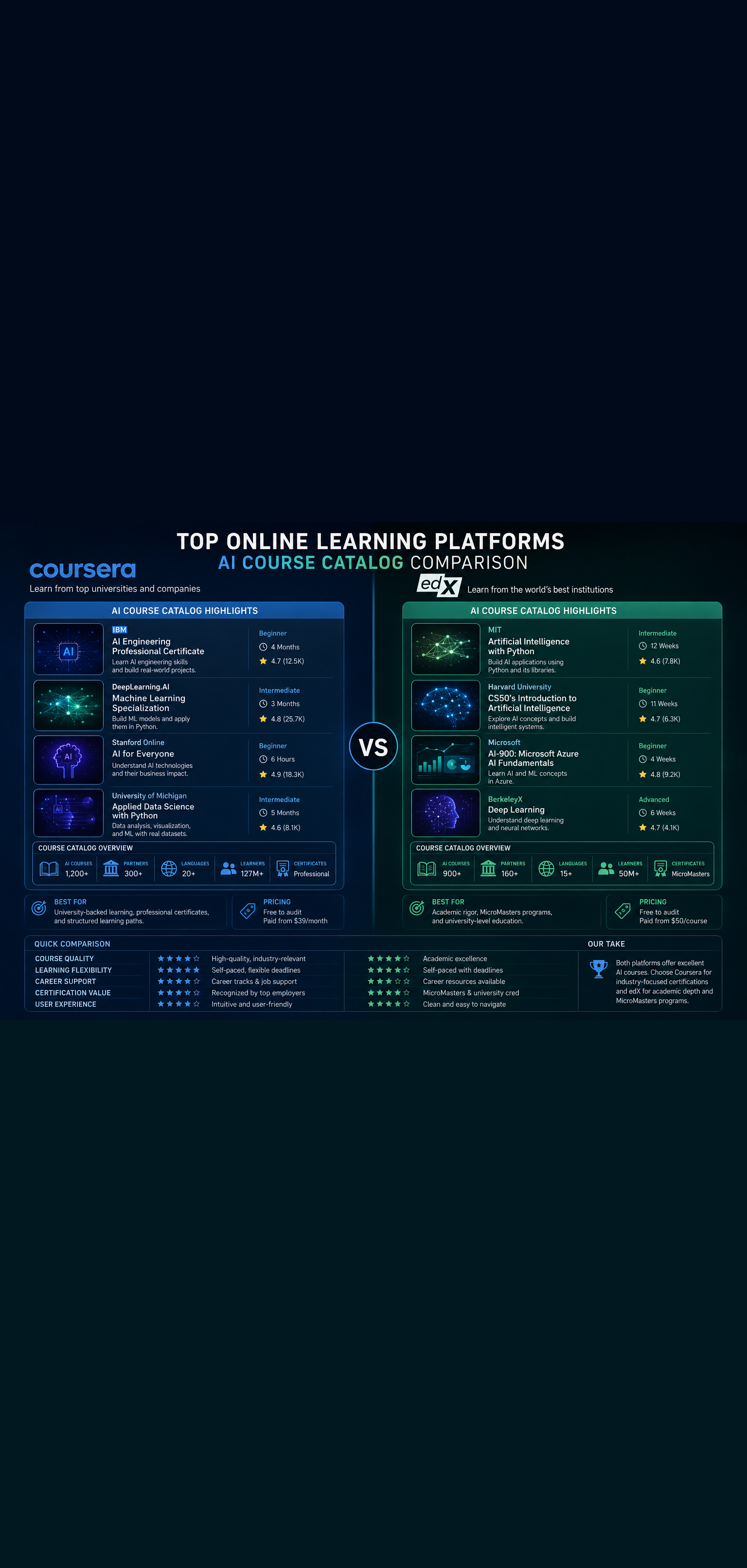
Coursera vs Udemy: Which Platform Is Better for AI Learning?
Two names dominate the online learning conversation for professionals building AI skills in 2026. Coursera and Udemy sit at the top of most recommended lists, appear in virtually every AI learning guide, and between them host thousands of courses covering every dimension of artificial intelligence.
But they are not interchangeable. They were built with different philosophies, serve different needs, and produce different outcomes. Choosing the wrong one for your specific goal is not just a minor inconvenience. It can mean spending money on content that does not fit your learning style, pursuing credentials that do not match what employers in your field actually value, or finishing a course that leaves you with theory but no practical skills.
This guide gives you an honest, side-by-side comparison of Coursera and Udemy for AI learning so you can make a confident decision and get started with the right platform for your situation.
Understanding the Core Difference
Before comparing specific features, it helps to understand the fundamental difference in how these two platforms were designed.
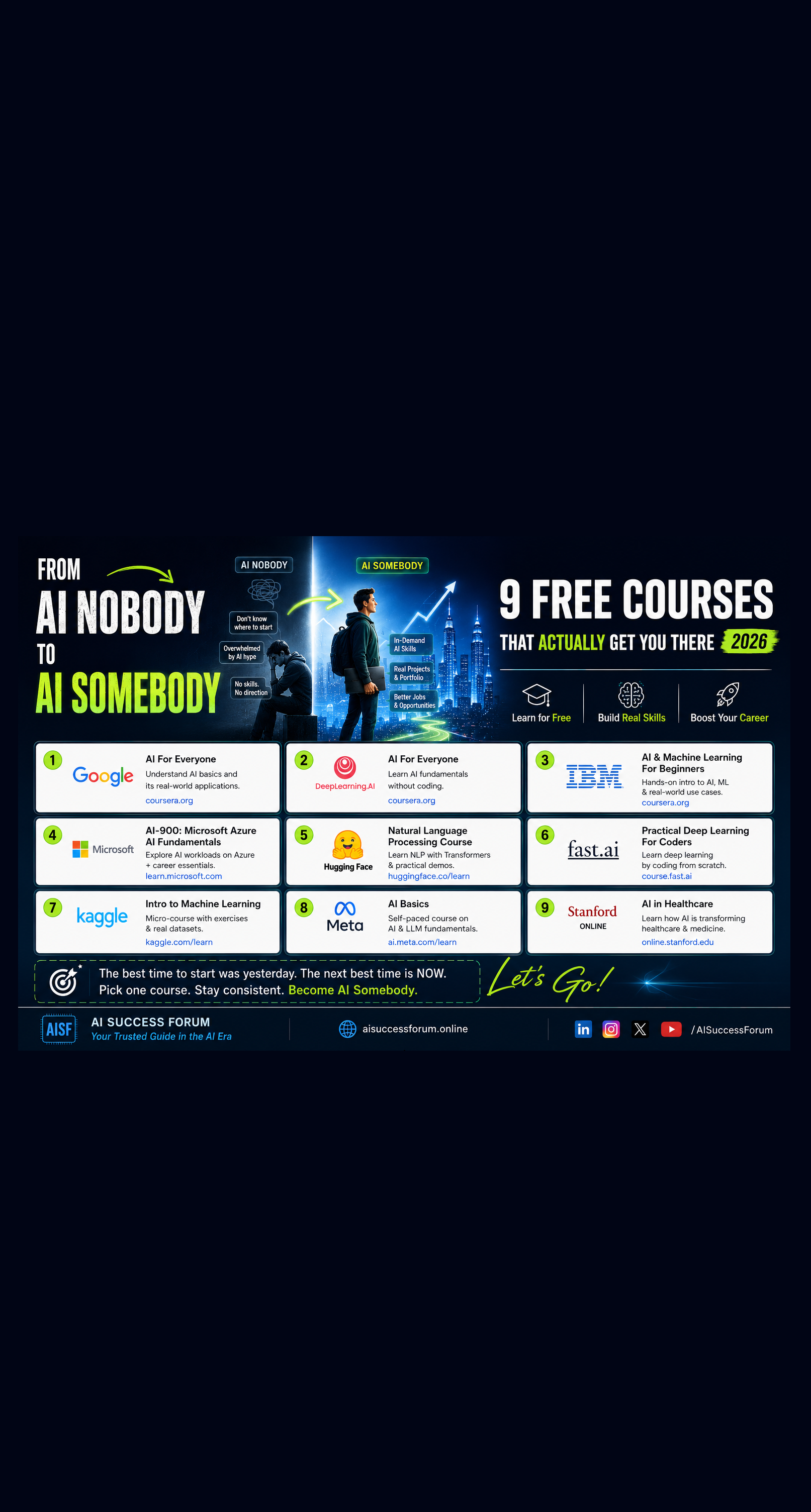
Coursera was built as a partnership platform. It works with universities like Stanford, Duke, and Michigan, and with companies like Google, IBM, and Meta to deliver structured, curriculum-based courses and certificates. The emphasis is on academic rigor, employer recognition, and formal credentialing.
Udemy was built as a marketplace. Independent instructors create and sell courses directly to learners. The emphasis is on practical skills, affordability, speed to value, and breadth of content. There is no formal vetting process equivalent to Coursera's university partnerships.
Neither model is superior in absolute terms. They serve different learners with different goals. The question is which model serves yours.
Content Quality and Depth
Coursera
Coursera's content quality is consistently high because the source is consistently credible. When you take an AI course on Coursera, the curriculum has typically been developed by a university faculty member, a team of industry experts, or both. The material is peer-reviewed and structured with clear learning objectives.
For AI specifically, Coursera hosts some of the most respected courses in existence. Andrew Ng's Machine Learning Specialization and Deep Learning Specialization are considered foundational references in the field. Google's AI Essentials and IBM's AI Fundamentals certificates are built on years of industry experience from organizations at the forefront of AI development.
The depth is real. These are not surface-level introductions dressed up with technical vocabulary. The concepts are explained thoroughly, the assignments require genuine engagement, and the capstone projects produce portfolio-ready work.
Udemy
Udemy's content quality varies more widely because anyone can publish a course. The platform has tens of thousands of AI-related courses, and the range in quality is significant. However, the review and rating system is robust enough that genuinely poor courses surface to the bottom quickly while strong courses rise based on learner feedback.
The top-rated AI and ChatGPT courses on Udemy are excellent. They are typically created by practitioners who are actively working with these tools and updating their content frequently to reflect the latest features and capabilities. In a field as fast-moving as AI, that currency of content matters enormously.
Where Udemy genuinely excels is in practical, tool-specific instruction. Courses focused on using ChatGPT, Midjourney, Power BI, or Python for specific business applications tend to be more immediately applicable on Udemy than the equivalent content on Coursera.
Verdict: Coursera wins on consistent depth and academic rigor. Udemy wins on practical applicability and content currency for fast-moving tools.
Credentials and Career Recognition
Coursera
This is where Coursera has a clear and significant advantage for professionals whose goal is career advancement or formal recognition.
Coursera certificates carry the name of the issuing institution. A certificate from Google, IBM, DeepLearning.AI, or Stanford has weight in hiring conversations that a generic course completion does not. Many Coursera certificates are directly integrated into LinkedIn profiles and appear as recognized credentials in recruiter searches.
Several Coursera programs also align with or prepare learners for industry certifications. The Google Data Analytics Certificate, for example, includes direct hiring program support from Google. IBM certificates are recognized in enterprise hiring pipelines. For professionals in roles where credentials are evaluated, this matters.
Udemy
Udemy certificates of completion are exactly that. Certificates confirming you finished a course. They do not carry institutional backing and they are not recognized in hiring pipelines the way Coursera credentials are.
This does not mean Udemy learning is without career value. The skills you build are real and applicable regardless of what the certificate says. But if your goal includes a credential that influences a hiring manager or supports a promotion conversation, Udemy certificates alone will not carry that weight.
Verdict: Coursera wins this category decisively for professionals whose goal includes formal credentialing. Udemy certificates are useful for personal tracking but carry limited external credibility.
Cost and Value
Coursera
Coursera operates primarily on a subscription model at approximately $59 per month, which provides access to the majority of courses and certificates on the platform. Annual subscriptions reduce this cost significantly. Individual courses can also be audited for free, meaning you can access all lecture content without paying, though you will not receive a certificate or access to graded assignments.
For professionals working through a multi-month learning path, the subscription model delivers strong value. Completing two or three certificate programs in a year at subscription pricing costs significantly less than purchasing each individually.
Some programs, particularly professional degrees and Coursera Plus bundles, carry higher price points. But for the core catalog of AI learning content most professionals need, the standard subscription is sufficient.
Udemy
Udemy's pricing model is more transparent and often more immediately affordable. Individual courses are priced between $20 and $200 at full price, but Udemy runs frequent sales that regularly bring most courses to $12 to $20. If you only need one or two specific courses, Udemy's per-course pricing often beats Coursera's subscription.
There is no subscription required. You purchase a course once and own it permanently, including all future updates. In a field where content currency matters, lifetime access to an actively maintained course is genuine value.
Verdict: For single courses, Udemy is often more affordable. For learners pursuing multiple certifications over months, Coursera's subscription model offers better long-term value. Budget-focused learners who only need one or two practical courses should default to Udemy.
Learning Experience and Structure
Coursera
Coursera courses are structured around a formal academic model. Content is divided into weeks or modules, assignments have deadlines, peer reviews are part of the process, and progress is tracked against a clear curriculum. Specializations and professional certificates are multi-course programs designed to build knowledge progressively.
For learners who benefit from external structure, accountability, and a defined path with a clear endpoint, Coursera's model works exceptionally well. The pacing guidance prevents the aimless content consumption that derails many self-directed learners.
The trade-off is flexibility. Coursera's structured approach can feel rigid for professionals who need to fit learning around unpredictable schedules or who want to jump to the specific module most relevant to an immediate work problem.
Udemy
Udemy courses are self-paced with no deadlines, no structured progression between courses, and no external accountability mechanisms. You buy a course, work through it when you can, and move at whatever speed suits your schedule.
This flexibility is genuinely valuable for busy professionals. The ability to watch a 20-minute lesson at any time, pause mid-course for weeks if work demands it, and return without any penalty removes a significant barrier to starting.
The risk is that without structure, many learners never finish. Udemy completion rates are notoriously low across the platform, not because the courses are bad but because the absence of structure removes the friction that keeps learners engaged.
Verdict: Coursera wins for learners who need structure and accountability. Udemy wins for professionals who value flexibility and self-direction.
Content Updates and Relevance for AI
This factor is uniquely important for AI learning because the field evolves faster than almost any other professional discipline.
Coursera
University-developed content on Coursera tends to update on academic timelines, which can mean significant lag between new AI developments and curriculum updates. Foundational courses on machine learning and deep learning remain relevant because the underlying concepts are durable. But courses on specific tools or recent capabilities can feel dated within months of publication.
Company-developed courses from Google, IBM, and Microsoft update more frequently, but still face the institutional inertia that slows responsiveness to rapid change.
Udemy
Individual instructors on Udemy can and regularly do update their courses within days of a significant new release or feature update. The top ChatGPT and AI tools courses on Udemy in 2026 reflect the most current capabilities because the instructors are practitioners who are using these tools daily and have strong incentives to keep their content current.
For learning about specific AI tools and their latest features, Udemy's update velocity is a meaningful advantage.
Verdict: Udemy wins for content currency on specific tools. Coursera wins for durable foundational content that does not need frequent updating.
Which Platform Is Right for You?
Rather than declaring an overall winner, the honest answer is that the right platform depends entirely on your specific situation. Here is a direct decision framework.
Choose Coursera if:
- Your primary goal is earning a recognized credential for career advancement
- You want university or major tech company backing on your certificate
- You are learning foundational AI concepts that require academic depth
- You benefit from structured deadlines and progressive curriculum design
- You plan to complete multiple certificates over the next six to twelve months
Choose Udemy if:
- You need practical, tool-specific skills you can apply immediately
- Budget is a significant consideration and you only need one or two courses
- You want the most current content on fast-evolving tools like ChatGPT or Midjourney
- Your schedule is unpredictable and you need maximum flexibility
- You are already skilled in the fundamentals and want to go deep on a specific application
Use both if:
- You want to pair foundational credentialing on Coursera with practical tool depth on Udemy
- Your organization reimburses learning costs, making price less of a constraint
- You are serious about building comprehensive AI fluency across multiple dimensions
Many of the most effective AI learners in 2026 use Coursera for their formal credential path and Udemy for staying current on specific tools and techniques. The two platforms complement each other well when used intentionally.
The Bottom Line
Coursera and Udemy are both excellent platforms. The question was never which one is better in the abstract. The question is which one serves your specific learning goal, budget, and timeline.
Get clear on what you are actually trying to achieve. If you need a credential that moves your career forward, Coursera is the answer. If you need to use a specific AI tool better by next week, Udemy is the answer. If you want both, use both.
The professionals gaining the most from AI learning in 2026 are not the ones who spent months researching the perfect platform. They are the ones who made a decision, started learning, and applied what they learned to real work immediately.
You now have everything you need to make that decision confidently.
Choose your platform based on your primary goal today, enroll in one course this week, and commit to finishing it before you evaluate the next step. That forward momentum is what produces real results.
Want more insights like this? Subscribe to the AI Success Forum newsletter.