Best AI Image Generators Compared
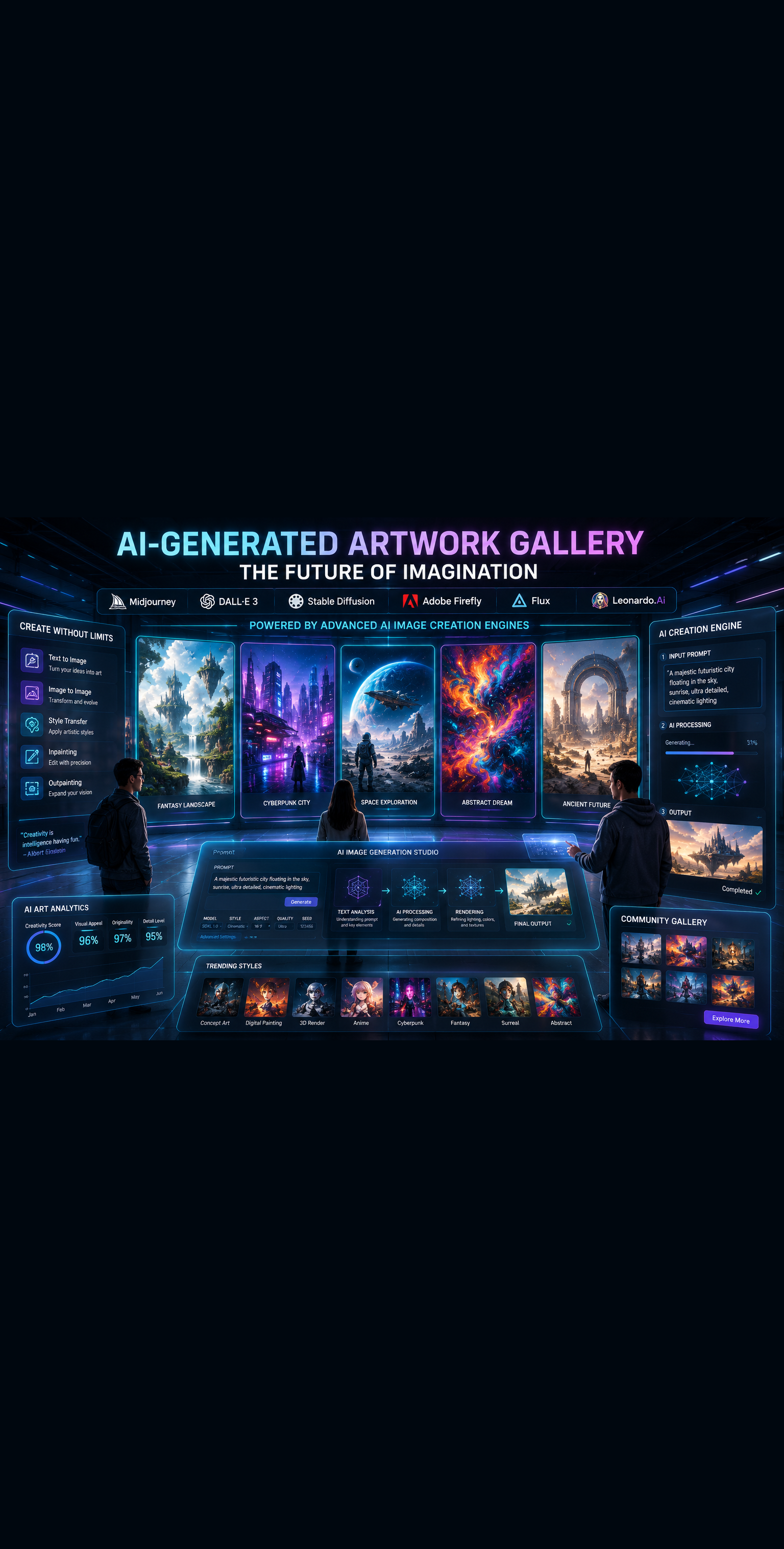
The AI image generation space has exploded. What started with blurry, distorted outputs a few years ago has evolved into tools that produce stunning, photorealistic visuals in seconds. Whether you are a blogger needing featured images, a marketer building ad creatives, or a creator building a brand, the best AI image generators available today can replace expensive design work almost entirely.
But not every tool is built for the same use case. Midjourney, DALL-E, Flux, and their competitors each have real strengths and real limitations. This comparison breaks down exactly what each one does well so you can pick the right tool without wasting time or money testing all of them yourself.
Why AI Image Generation Matters for Creators and Businesses
Stock photos are generic. Hiring a designer or photographer for every piece of content is expensive and slow. AI image generators solve both problems simultaneously.
With the right tool, you can produce custom, on-brand visuals for blog posts, social media, ads, thumbnails, product mockups, and more in minutes. The quality ceiling has risen dramatically in 2026, and the gap between AI-generated visuals and professionally shot photography continues to narrow.
For content creators, marketers, and business owners, this is one of the highest-leverage tools available right now.
Best AI Image Generators Compared
1. Midjourney
Midjourney remains the gold standard for artistic quality in AI image generation. If you want visuals that look like they came from a professional illustrator or concept artist, nothing else consistently matches it.
Best for: Designers, brand creators, concept artists, and anyone prioritizing aesthetic quality above all else.
Key strengths:
- Unmatched artistic style and visual quality
- Highly customizable through detailed prompting
- Consistent style across a series of images
- Strong community with shared prompts and techniques
- Regular model updates pushing quality forward
Limitations:
- Operates inside Discord, which feels awkward for new users
- No free tier currently available
- Photorealism has improved but still trails dedicated realism tools
- Prompt learning curve is steeper than competitors
Midjourney v6 and beyond produces imagery that stops people mid-scroll. For brand identity work, editorial illustrations, and any visual where artistic impression matters more than strict realism, it is still the first tool serious creators reach for.
Pricing: Starts at around $10 per month for the basic plan with limited generations.
2. DALL-E 3 by OpenAI
DALL-E 3 is the most accessible AI image generator for everyday users, primarily because it is built directly into ChatGPT. You describe what you want in plain conversational language and it delivers surprisingly accurate results.
Best for: Bloggers, marketers, and business owners who need quick, accurate visuals without a steep learning curve.
Key strengths:
- Exceptional at following detailed text prompts accurately
- Handles text within images better than most competitors
- Integrated directly into ChatGPT for seamless workflow
- Strong at conceptual and instructional illustrations
- Safer content policies make it reliable for professional use
Limitations:
- Artistic style is less distinctive than Midjourney
- Photorealism is improving but not best in class
- Generation speed can vary depending on server load
- Less control over fine artistic details
Where DALL-E 3 genuinely stands out is prompt accuracy. If you describe a specific scene with multiple elements, it follows your instructions more faithfully than almost any competitor. For bloggers who need a featured image matching a specific concept, that accuracy matters more than raw artistic beauty.
Pricing: Included with ChatGPT Plus at $20 per month. Also available via API for developers.
3. Flux by Black Forest Labs
Flux is the newest major player on this list and it has made a serious impact in a short time. Developed by former Stable Diffusion researchers, Flux produces photorealistic images with a level of detail and accuracy that rivals the best tools available.
Best for: Creators and developers who need photorealistic outputs, accurate human anatomy, and flexible deployment options.
Key strengths:
- Industry-leading photorealism for human subjects
- Accurate hands, faces, and body proportions (a historically weak area for AI)
- Available through multiple platforms and as open weights
- Fast generation speed
- Strong prompt adherence comparable to DALL-E 3
Limitations:
- Artistic stylization is not its primary strength
- Requires third-party platforms for most users
- Still building its community and prompt library compared to Midjourney
Flux has solved one of the longest-standing frustrations with AI image generation: distorted hands and faces. If you need realistic human subjects for marketing materials, course thumbnails, or social media content, Flux is currently the strongest option available.
Pricing: Available free through platforms like Hugging Face. Paid tiers through platforms like Replicate and fal.ai vary by usage.
4. Adobe Firefly
Adobe Firefly is the AI image generator built for professionals who need commercially safe content. Every image generated through Firefly is trained on licensed Adobe Stock content, which means you can use the outputs in commercial projects without legal concerns.
Best for: Marketing agencies, business owners, and professional designers who need legally clear visuals for commercial use.
Key strengths:
- Commercially safe outputs with full licensing clarity
- Deep integration with Photoshop, Illustrator, and Adobe Express
- Generative Fill feature for extending and editing existing photos
- Strong for product photography and lifestyle imagery
- Consistent quality for professional marketing materials
Limitations:
- Less creatively experimental than Midjourney
- Requires Adobe subscription for full access
- Not the strongest choice for highly stylized artistic work
The Generative Fill feature inside Photoshop is where Firefly truly separates itself. You can extend a photo's background, remove objects, and replace elements with AI-generated content that matches the original image seamlessly. For photographers and marketers working with existing visual assets, this capability is genuinely powerful.
Pricing: Included with Adobe Creative Cloud plans. Standalone Firefly credits available from around $5 per month.
5. Stable Diffusion (via Automatic1111 or ComfyUI)
Stable Diffusion is the open-source foundation that much of the AI image generation industry is built on. Running it yourself gives you complete control, unlimited generations, and the ability to fine-tune models for specific styles or subjects.
Best for: Developers, technical creators, and power users who want maximum control and zero per-generation costs.
Key strengths:
- Completely free to run locally on your own hardware
- Massive ecosystem of custom models and fine-tunes
- Train on your own images for consistent character or style
- No content restrictions when self-hosted
- Huge community with thousands of shared models and workflows
Limitations:
- Requires a capable GPU for fast local generation
- Setup is technical and not beginner-friendly
- Quality depends heavily on which model you use
- No customer support or guided onboarding
For creators building faceless YouTube channels with a consistent visual identity, or businesses needing a proprietary image style, training a custom Stable Diffusion model is the most powerful long-term option. The upfront investment in setup pays off if you generate images at volume.
Pricing: Free to self-host. Cloud-based options like RunDiffusion start from around $0.50 per hour.
6. Leonardo AI
Leonardo AI has carved out a strong position as a creator-friendly platform built on top of Stable Diffusion with a polished interface and a suite of tools designed for game developers, illustrators, and digital artists.
Best for: Game designers, digital artists, and creators who need consistent character design and asset generation.
Key strengths:
- Fine-tuned models for specific styles and game assets
- Image-to-image transformation with strong consistency
- Canvas editor for iterative design work
- Motion generation for animating still images
- Generous free tier for new users
Limitations:
- Less suited for photorealistic content than Flux
- Interface can feel overwhelming with so many options
- Best results require familiarity with model selection
The consistency features in Leonardo AI are particularly valuable for creators building visual series. If you need a character to look the same across dozens of images, Leonardo's model training and image reference tools deliver that reliability better than most competitors.
Pricing: Free tier available with 150 tokens per day. Paid plans start at around $12 per month.
Head-to-Head Comparison
| Tool | Best For | Photorealism | Artistic Quality | Free Tier | Ease of Use |
|---|---|---|---|---|---|
| Midjourney | Artistic visuals | Good | Excellent | No | Moderate |
| DALL-E 3 | Prompt accuracy | Good | Good | Limited | Easy |
| Flux | Photorealistic humans | Excellent | Good | Yes | Moderate |
| Adobe Firefly | Commercial use | Good | Good | Limited | Easy |
| Stable Diffusion | Power users | Variable | Variable | Yes | Hard |
| Leonardo AI | Game assets, consistency | Good | Very Good | Yes | Moderate |
How to Choose the Right AI Image Generator
The right tool depends entirely on what you are creating and how you plan to use the output.
For bloggers and content marketers: DALL-E 3 inside ChatGPT is the most frictionless option. Quick, accurate, and already inside a tool you probably use daily.
For brand designers and creative agencies: Midjourney produces the highest-quality artistic output consistently. The Discord interface is a minor inconvenience compared to the quality advantage.
For photorealistic human subjects: Flux is the clear leader right now. Accurate faces, hands, and proportions make it the best choice for marketing visuals featuring people.
For commercial projects needing legal clarity: Adobe Firefly is the only major tool with full commercial licensing built in from the ground up.
For high-volume generation or custom styles: Stable Diffusion self-hosted gives you unlimited output and the ability to train on your own visual identity.
For game developers and digital artists: Leonardo AI offers the best combination of consistency tools, model variety, and creator-focused features.
Tips for Getting Better Results from Any AI Image Generator
Regardless of which tool you choose, these principles improve output quality across all of them.
Be specific with your prompts. Vague prompts produce generic results. Describe the lighting, style, mood, color palette, and composition you want.
Reference real styles and mediums. Phrases like "shot on 35mm film," "watercolor illustration," or "studio lighting with soft shadows" give the model clear direction.
Iterate rather than regenerate. Use your best result as a starting point and refine it with follow-up prompts or image-to-image features rather than starting from scratch each time.
Save your best prompts. Build a personal library of prompts that consistently produce strong results for your specific use case. This is one of the most underrated productivity habits for regular AI image users.
The Right Tool Is the One You Will Actually Use
The best AI image generator is not objectively the one with the highest technical benchmark. It is the one that fits your workflow, your skill level, and your output needs.
Start with the free tiers of Flux, Leonardo AI, or DALL-E 3 inside ChatGPT. Get comfortable with prompting. Once you understand what you need from a tool, the paid upgrade decision becomes obvious.
The gap between amateur and professional visual content has never been smaller. With the right AI image generator in your stack, you have the creative capability that used to require a full design team.
Want more insights like this? Subscribe to the AI Success Forum newsletter.